12/11/2026
Digital Twin Engineer Career Path UK: Skills, IoT Platforms and Real-Time Data Systems
What Is a Digital Twin Engineer?
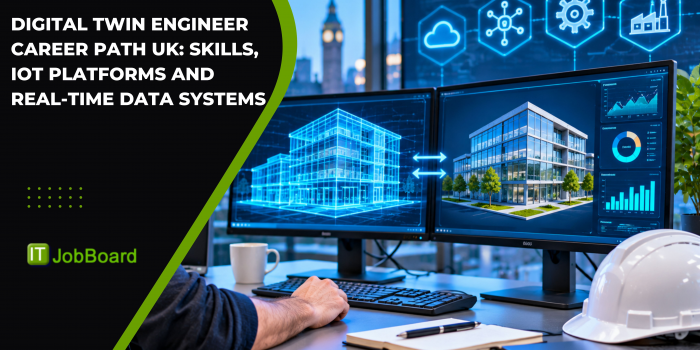
A Digital Twin Engineer develops and maintains virtual representations of physical objects, systems, buildings, machines or industrial processes. These digital models use information from sensors, connected devices, software platforms and operational systems to represent the behaviour and condition of real-world assets.
For example, a manufacturing company can create a digital twin of a production machine to monitor its performance, identify unusual operating conditions and evaluate possible maintenance requirements. Similarly, an engineering organisation can use a digital twin of a building to understand energy consumption, equipment performance and environmental conditions.
In the UK, Digital Twin Engineers may work across manufacturing, construction, infrastructure, energy, transport, healthcare and technology.
The role combines several technical disciplines, including:
- Software engineering.
- Internet of Things (IoT).
- Data engineering.
- Cloud computing.
- Simulation and modelling.
- Systems engineering.
- Artificial intelligence and analytics.
Employers may advertise similar positions under titles such as Digital Twin Engineer, Digital Twin Developer, Digital Engineering Specialist, Simulation Engineer, IoT Engineer or Industrial Data Engineer.
Why Is Digital Twin Technology Becoming Important in the UK?
Digital twin technology helps organisations understand how physical assets and processes operate by connecting real-world information with digital models.
Instead of relying only on occasional inspections or historical reports, businesses can use connected data to monitor systems and evaluate potential changes.
For example, an infrastructure operator could use a digital representation of a railway asset to understand its operating condition. A manufacturing business could analyse equipment performance to identify maintenance requirements. A building operator could examine energy consumption and environmental conditions.
Digital twins are relevant to several UK sectors.
Manufacturing: Companies can represent production equipment, factory processes and industrial systems to analyse performance and operational efficiency.
Construction: Digital representations of buildings and infrastructure can support design coordination, asset information management and facilities operations.
Energy: Digital twins can help monitor power generation equipment, energy networks and offshore infrastructure.
Transport: Railway, road and aviation organisations can use digital representations of assets and systems to support monitoring and planning.
Healthcare: Digital modelling can support medical research, equipment monitoring and selected healthcare applications.
Smart buildings: Connected building systems can provide information about heating, ventilation, lighting and energy consumption.
The UK Government's National Digital Twin Programme has explored how connected digital twins and information-sharing approaches can support the built environment and infrastructure sectors.
This wider development makes digital twin technologies relevant to professionals working across engineering, software, data and connected systems.
What Does a Digital Twin Engineer Do?
The responsibilities of a Digital Twin Engineer depend on the organisation and the type of physical system being represented.
Typical responsibilities include:
- Developing digital models
Engineers create virtual representations of physical equipment, buildings, infrastructure or industrial processes. Models may include information about structure, behaviour, components and operating conditions.
- Integrating IoT sensors
Digital twins often depend on information collected from physical devices. Engineers connect sensors and equipment to data platforms so that real-world information can update the digital model.
- Managing real-time data
Engineers develop systems that collect, process and transfer information from physical assets. They may work with streaming data, APIs, databases and cloud platforms.
- Building simulation environments
Simulation allows organisations to evaluate different scenarios without making immediate changes to physical systems. Engineers may model equipment behaviour, operating conditions or process performance.
- Connecting software platforms
Digital twin projects often involve several technologies. Engineers integrate modelling tools, cloud services, data platforms, IoT systems and business applications.
- Supporting analytics and monitoring
Engineers help create dashboards and analytical systems that allow users to understand asset performance, identify unusual behaviour and investigate operational trends.
- Maintaining digital twin accuracy
A digital twin is useful only when its information represents the physical system accurately enough for its intended purpose. Engineers help validate data sources, model assumptions and system integrations.
What Skills Are Required for Digital Twin Engineer Jobs in the UK?
Digital twin engineering requires a combination of software, data, modelling and engineering knowledge.
|
Skill area
|
Why it is useful
|
|
Python
|
Automation, data processing and application development
|
|
SQL
|
Managing and querying structured data
|
|
IoT
|
Connecting sensors and physical devices
|
|
Cloud computing
|
Hosting and managing digital twin platforms
|
|
APIs
|
Connecting software systems and data sources
|
|
3D modelling
|
Creating digital representations of physical assets
|
|
Simulation
|
Modelling physical processes and evaluating scenarios
|
|
Data visualisation
|
Presenting asset information through dashboards
|
|
Networking
|
Supporting communication between connected devices
|
|
Data engineering
|
Collecting, processing and managing operational data
|
Is Python Important for Digital Twin Engineering?
Python is useful for automating data processing, integrating APIs, analysing sensor information and developing supporting applications.
It can also be used for simulation, data validation and connecting different software components.
SQL is valuable when working with structured information stored in databases. Engineers may also need JavaScript or other programming languages depending on the platform and application.
Do Digital Twin Engineers Need 3D Modelling Skills?
Not every digital twin role requires advanced 3D modelling.
Some positions focus on data integration, monitoring and analytics, while others involve creating detailed visual representations of physical assets.
Knowledge of computer-aided design, 3D modelling, geometry and engineering simulation can be useful for roles involving buildings, machinery and infrastructure.
Which Digital Twin Platforms and Tools Should You Learn?
The tools required depend on the industry and employer.
Some commonly relevant platforms and technologies include:
|
Platform or technology
|
Typical application
|
|
Azure Digital Twins
|
Modelling connected environments and relationships
|
|
AWS IoT TwinMaker
|
Building digital twins using operational data
|
|
Siemens digital twin technologies
|
Industrial engineering and manufacturing applications
|
|
Autodesk Tandem
|
Digital twin applications for buildings and facilities
|
|
Unity
|
Interactive 3D visualisation and simulation
|
|
Unreal Engine
|
Real-time 3D environments and visualisation
|
|
Python
|
Data processing and automation
|
|
SQL
|
Data management and analysis
|
|
MQTT
|
Messaging between connected devices
|
|
APIs
|
Integrating applications and platforms
|
Candidates do not need to learn every platform. It is more useful to understand digital twin concepts and gain practical experience with one or two tools relevant to the industry they want to enter.
Official documentation can provide a starting point:
What Qualifications Can Help You Become a Digital Twin Engineer?
There is no single mandatory qualification for every Digital Twin Engineer vacancy. Employers may recruit candidates from software engineering, computer science, data engineering and traditional engineering backgrounds.
Relevant degree subjects include:
- Computer Science.
- Software Engineering.
- Data Science.
- Mechanical Engineering.
- Electrical and Electronic Engineering.
- Civil Engineering.
- Systems Engineering.
- Mechatronics.
- Building Services Engineering.
Candidates interested in construction and infrastructure applications may benefit from knowledge of Building Information Modelling (BIM), asset information management and engineering design.
Those targeting industrial applications may benefit from automation, control systems, manufacturing technology and IoT experience.
Professional training in cloud computing, data engineering, simulation or digital engineering can also strengthen a candidate's technical profile.
Practical project experience is particularly useful because it demonstrates how different technologies work together.
How Can You Start a Digital Twin Engineering Career in the UK?
A career in digital twin engineering can begin through several related technical roles.
Step 1: Learn programming and data fundamentals
Start with Python and SQL. Understand how to collect, process, validate and analyse data.
Step 2: Understand IoT systems
Learn how sensors and connected devices collect information. Study communication protocols such as MQTT and understand how devices send information to software platforms.
Step 3: Develop cloud computing knowledge
Explore a major cloud platform and learn how data services, APIs, storage and computing resources work together.
Step 4: Explore digital twin platforms
Experiment with a digital twin development platform such as Azure Digital Twins or AWS IoT TwinMaker.
Step 5: Learn modelling and simulation
Develop an understanding of how physical systems can be represented digitally. Explore 3D modelling or simulation tools if they are relevant to your chosen industry.
Step 6: Build a practical portfolio
Create a small project that connects a simulated or real sensor to a digital representation of an object or system. Display the collected information through a dashboard and explain how the digital model reflects the physical system.
Step 7: Apply for related technical roles
Search for junior digital engineering, IoT development, data engineering, simulation and software engineering positions to build relevant experience.
What Career Opportunities Are Available for Digital Twin Engineers?
Digital twin expertise can support several specialist career paths.
- Digital Twin Engineer: Develops and maintains virtual representations of physical systems.
- Digital Twin Developer: Builds digital twin applications and integrations.
- IoT Engineer: Connects physical devices, sensors and software platforms.
- Simulation Engineer: Develops models to represent and evaluate physical processes.
- Data Engineer: Builds systems for collecting, processing and managing operational information.
- Digital Engineering Specialist: Supports digital engineering workflows across infrastructure and industrial projects.
- Industrial Software Engineer: Develops software for manufacturing and connected industrial systems.
With experience, professionals may progress into senior engineering, digital architecture, technical leadership or specialist digital transformation roles.
What Should You Include in a Digital Twin Engineer CV?
A strong CV should show how you connect software, data and physical systems.
Include:
- Python, SQL or other programming experience.
- IoT and sensor integration.
- Cloud platform knowledge.
- Digital twin or simulation project experience.
- API and data integration skills.
- Data visualisation and monitoring.
- 3D modelling or engineering design knowledge, where relevant.
- Experience with industrial systems, buildings or infrastructure.
- Relevant certifications and technical training.
Describe your projects in terms of the problem, technologies used and results achieved. For example, explain how you connected sensor data to a digital model or created a dashboard to monitor equipment performance.
This gives recruiters a clearer understanding of your practical capabilities.
Is Digital Twin Engineering a Good Career Choice in the UK?
Digital twin engineering can be a useful career direction for people interested in combining software development, data analysis and physical engineering systems.
Its applications across manufacturing, infrastructure, construction, transport and energy provide opportunities for professionals with different technical backgrounds.
The UK's National Digital Twin Programme demonstrates the importance of connected information and digital representations in the built environment. However, not every organisation uses the same platforms or job titles.
Candidates should build transferable skills in Python, IoT, cloud computing, data engineering and simulation. Searching for related vacancies under Digital Engineer, IoT Engineer, Simulation Engineer and Digital Twin Developer can help identify relevant opportunities.
Key Takeaways
- Digital Twin Engineers develop virtual representations of physical assets and systems.
- The role combines software engineering, IoT, cloud computing, data and simulation.
- Python, SQL, APIs and cloud platforms are useful technical skills.
- Digital twins have applications in manufacturing, construction, energy, transport and healthcare.
- Relevant career routes include software engineering, data engineering, IoT and simulation.
- Practical projects demonstrating sensor integration and digital modelling can strengthen a CV.
Frequently Asked Questions
- What does a Digital Twin Engineer do?
A Digital Twin Engineer develops and maintains virtual representations of physical objects, equipment or systems. The role involves connecting real-world data, IoT devices, software platforms and simulation tools to monitor and analyse physical assets.
- What skills are required for Digital Twin Engineer jobs in the UK?
Important skills include Python, SQL, IoT, cloud computing, APIs, data engineering, simulation and data visualisation. Some roles also require 3D modelling and engineering design knowledge.
- Which industries use digital twin technology in the UK?
Digital twin technology is used in manufacturing, construction, energy, transport, healthcare and smart buildings. Organisations use it to monitor equipment, analyse performance and understand complex physical systems.
- Do Digital Twin Engineers need programming knowledge?
Yes. Programming knowledge is useful for integrating data sources, developing applications and automating digital twin processes. Python and SQL are particularly useful, although the exact languages depend on the employer and platform.
- Which platforms are used to develop digital twins?
Common platforms and technologies include Microsoft Azure Digital Twins, AWS IoT TwinMaker, Siemens digital twin technologies, Autodesk Tandem, Unity and Unreal Engine. The tools required depend on the industry and project.