27/08/2026
Can You Start a Cybersecurity Career Without a Degree?
A cybersecurity career without a degree UK is possible, particularly for candidates who can demonstrate relevant technical skills, certifications and practical experience. Although a computer science, cybersecurity or related degree can be useful, it is not the only route into the industry. Employers can also value hands-on technical ability, problem-solving skills and evidence that a candidate understands how security systems work.
The UK cybersecurity sector includes a wide range of roles, from Security Operations Centre (SOC) Analysts and Cyber Security Analysts to penetration testers, security engineers, cloud security specialists and governance professionals. Government research into the UK cyber labour market specifically examines skills gaps and shortages across the sector, highlighting the importance of developing relevant capabilities rather than relying on one educational route.
For someone changing careers or starting without a university background, the key is to build a structured pathway rather than trying to learn every area of cybersecurity at once.
Do You Need a Computer Science Degree for Cybersecurity?
No, not every cybersecurity job requires a computer science degree.
A degree can help demonstrate academic knowledge and may be required for some graduate schemes or specific employers. However, cybersecurity is a practical discipline, and many roles depend heavily on technical skills.
Employers may assess candidates based on:
- Networking knowledge
- Operating system knowledge
- Security fundamentals
- Cloud knowledge
- Security tools
- Problem-solving ability
- Incident investigation
- Scripting
- Practical projects
- Certifications
- Previous IT experience
The importance of these requirements varies according to the role.
For example, an entry-level SOC position may place greater emphasis on networking, security monitoring and analytical ability, while a Security Engineer role may require considerably more infrastructure and cloud experience.
Which Cybersecurity Jobs Can You Get Without a Degree?
If you are starting without a university degree, some cybersecurity roles can be more accessible than others.
Junior SOC Analyst
A Junior SOC Analyst monitors security alerts and helps investigate suspicious activity.
This can be an attractive entry route because it allows professionals to gain exposure to:
- SIEM platforms
- Security alerts
- Network activity
- Authentication events
- Incident response
- Threat intelligence
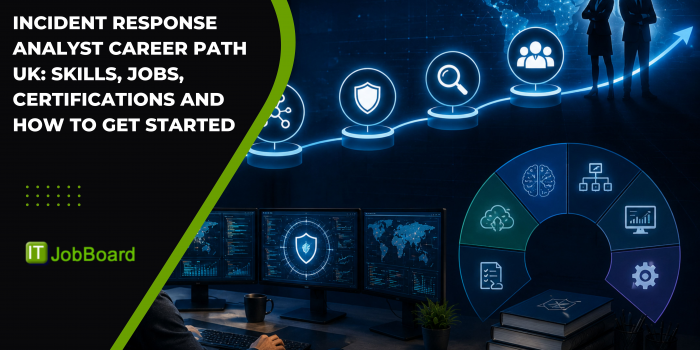
The role can eventually lead to Senior SOC Analyst, Threat Hunter, Incident Response or Detection Engineering positions.
Cyber Security Analyst
Cyber Security Analysts investigate threats, vulnerabilities and suspicious activity.
Depending on the employer, the role may involve:
- Security monitoring
- Log analysis
- Incident response
- Vulnerability management
- Threat intelligence
- Security reporting
IT Support to Cybersecurity
IT support can be an excellent stepping stone into cybersecurity.
IT professionals often already understand:
- Windows
- User accounts
- Authentication
- Hardware
- Software
- Troubleshooting
- Networking
- Access permissions
These fundamentals can be transferred into cybersecurity.
A possible pathway is:
IT Support → Junior SOC Analyst → Cyber Security Analyst → Senior Security Specialist
Network Security Roles
Candidates with networking experience can consider network security positions.
Understanding firewalls, VPNs, network protocols and traffic makes the transition into security easier.
GRC and Security Compliance
Not every cybersecurity career is heavily technical.
Governance, Risk and Compliance (GRC) roles can involve:
- Risk assessment
- Security policies
- Compliance
- Auditing
- Security frameworks
- Documentation
- Risk management
These positions can suit candidates who have strong analytical, organisational and communication skills.
What Skills Should You Learn First?
One of the biggest mistakes beginners make is trying to learn everything simultaneously.
Instead, build your skills in layers.
Step 1: Learn Networking Fundamentals
Start with:
- TCP/IP
- DNS
- HTTP and HTTPS
- Ports
- Firewalls
- VPNs
- Routing
- Network traffic
You do not need to become a network engineer, but you should understand how computers communicate.
Step 2: Learn Windows and Linux
Cybersecurity professionals regularly work with operating systems.
For Windows, understand:
- Users
- Permissions
- Active Directory basics
- Event Logs
- Processes
- Services
For Linux, learn:
- Command-line navigation
- File permissions
- Processes
- Users
- Networking
- Basic shell commands
Step 3: Learn Security Fundamentals
Understand concepts such as:
- Confidentiality
- Integrity
- Availability
- Authentication
- Authorisation
- Encryption
- Malware
- Phishing
- Vulnerabilities
- Threats
- Risk
- Security controls
These fundamentals provide the foundation for more advanced learning.
Step 4: Learn Security Monitoring
If you want to work in a SOC, learn how security monitoring works.
Understand:
- SIEM
- Security alerts
- Log analysis
- Indicators of compromise
- Detection rules
- Incident triage
- Escalation
You do not necessarily need experience with every commercial security platform. The important thing initially is understanding the concepts.
Step 5: Learn Basic Scripting
You do not need to become a software developer.
However, basic Python, PowerShell or Bash can be useful for automating repetitive tasks and analysing information.
Which Cybersecurity Certifications Should You Consider?
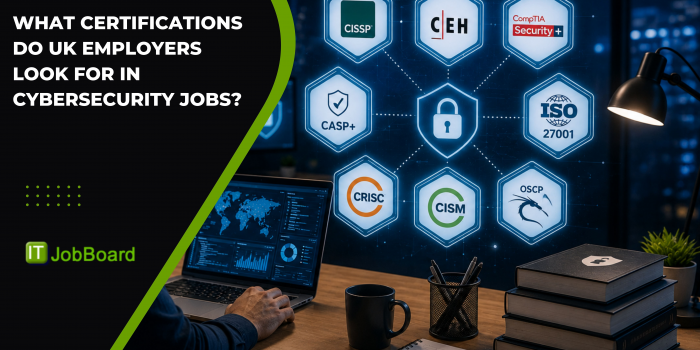
Certifications can help candidates demonstrate structured knowledge, particularly when they do not have a relevant degree.
CompTIA Security+
Security+ is commonly used as a foundational cybersecurity certification.
It covers areas such as:
- Threats
- Vulnerabilities
- Security architecture
- Security operations
- Identity management
- Network security
- Risk
It can be a reasonable starting point for someone new to cybersecurity.
CompTIA CySA+
CySA+ is more focused on security analytics, threat detection and incident response.
It may be more appropriate after developing foundational security knowledge.
Certified Ethical Hacker
CEH is associated with ethical hacking and penetration testing.
Candidates interested in offensive security can consider certifications and practical labs focused on vulnerability assessment and penetration testing.
Microsoft Security Certifications
Candidates interested in Microsoft-based security environments can explore Microsoft security certifications covering areas such as security operations, identity and cloud security.
Advanced Certifications
Certifications such as CISSP are generally more appropriate once professionals have developed significant industry experience.
The important point is to choose certifications according to the job you want rather than collecting qualifications without a clear career objective.
Your own ITJobBoard content already covers several cybersecurity certifications, so this article should link to that existing certification guide rather than competing with it as another certification roundup.
Is Certification Enough to Get a Cybersecurity Job?
No.
A certification can demonstrate knowledge, but employers may also want evidence that you can apply what you have learned.
For example, someone applying for a SOC Analyst position could demonstrate practical experience through:
- A home security lab
- Log analysis projects
- SIEM exercises
- Network monitoring
- Capture-the-Flag challenges
- Incident investigation exercises
- Security write-ups
The goal is to demonstrate how you think, not simply list the tools you have studied.
How to Build a Cybersecurity Home Lab
A home lab can provide practical experience without requiring access to an enterprise security environment.
You could create a small virtual environment containing:
- A Windows virtual machine
- A Linux virtual machine
- A virtual network
- Security monitoring tools
- Sample logs
- Test user accounts
You can then practise activities such as:
- Creating user accounts
- Reviewing authentication events
- Monitoring network traffic
- Investigating suspicious activity
- Analysing logs
- Creating detection rules
- Writing an incident report
Document the process.
For example, instead of writing:
“Completed a cybersecurity lab.”
Write:
“Investigated simulated suspicious authentication activity, analysed Windows event logs and documented the investigation and recommended response.”
The second example gives a recruiter considerably more information about your ability.
Can IT Support Experience Help You Move Into Cybersecurity?
Yes.
IT Support can provide a strong foundation for cybersecurity because many security problems involve systems, users, devices and access controls.
An IT Support professional may already understand:
- Password management
- User permissions
- Endpoint troubleshooting
- Windows administration
- Active Directory
- Networking
- Remote access
- Software installation
- Device management
To move towards cybersecurity, the professional can add:
Security fundamentals + networking + SIEM + incident response + practical security projects
This can create a credible transition pathway.
How to Build a Cybersecurity CV Without a Degree
If you do not have a computer science degree, your CV should make your practical skills easy to identify.
A strong structure can include:
Professional Summary
Explain your current technical background and cybersecurity direction.
Technical Skills
Group skills logically:
Security: SIEM, incident response, vulnerability management
Networking: TCP/IP, DNS, VPN, firewalls
Operating Systems: Windows, Linux
Cloud: AWS/Azure fundamentals
Scripting: Python, PowerShell
Certifications
List relevant certifications and the dates completed.
Practical Projects
Describe security labs and projects.
IT Experience
Highlight responsibilities that relate to cybersecurity.
Education
Include your existing education, even if it is not technology-related.
You do not need to hide the fact that you do not have a computer science degree. Instead, demonstrate what you have learned and what you can actually do.
How to Get Your First Cybersecurity Interview
Start by targeting realistic roles.
Instead of applying only for senior cybersecurity positions, search for:
- Junior SOC Analyst
- SOC Analyst
- Security Operations Analyst
- Junior Cyber Security Analyst
- IT Security Analyst
- Security Monitoring Analyst
- Cybersecurity Apprentice
- Junior Security Engineer
Read the requirements carefully.
If a vacancy lists ten requirements and you meet seven, it may still be worth applying depending on how important the missing requirements are.
Also tailor your CV to each role.
If a SOC vacancy emphasises SIEM and incident response, make your relevant experience and projects prominent rather than burying them near the bottom of the CV.
What If You Have No IT Experience?
You can still start building relevant experience.
One possible route is:
Networking fundamentals → IT support skills → Entry-level IT role → Cybersecurity training → Practical security projects → Junior cybersecurity position
Another route is:
Cybersecurity fundamentals → Certification → Home lab → Security projects → Junior SOC applications
The best route depends on your existing skills.
For someone with no technical background, developing IT fundamentals first can make cybersecurity learning much easier.
How Long Does It Take to Start a Cybersecurity Career?
There is no fixed timeframe.
Some people can become job-ready relatively quickly because they already have IT or networking experience. Others need more time to build their technical foundation.
A realistic learning progression might look like:
Foundation
Learn networking, operating systems and cybersecurity fundamentals.
Practical Stage
Build labs, practise investigations and learn security tools.
Job-Ready Stage
Create a cybersecurity CV, complete relevant projects and begin applying for suitable roles.
Career Development
Continue learning after entering the industry and specialise in an area such as cloud security, threat hunting, incident response or security engineering.
The important thing is to measure progress by skills demonstrated, not simply by the number of months spent studying.
Cybersecurity Career Paths After Your First Job
Your first cybersecurity job does not determine your entire career.
After gaining experience, you could move towards:
SOC and Security Operations
Junior SOC Analyst → SOC Analyst → Senior SOC Analyst → SOC Lead
Incident Response
SOC Analyst → Incident Response Analyst → Senior Incident Responder
Threat Hunting
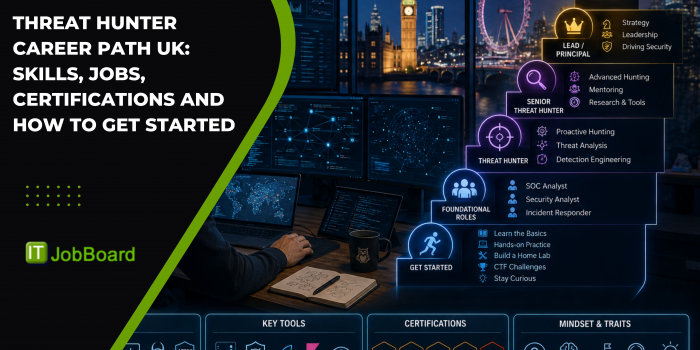
Security Analyst → Threat Hunter → Senior Threat Hunter
Security Engineering
Security Analyst → Security Engineer → Senior Security Engineer
Cloud Security
IT/Cloud Professional → Cloud Security Engineer → Senior Cloud Security Engineer
Security Architecture
Security Engineer → Senior Security Engineer → Security Architect
GRC
GRC Analyst → Security Risk Specialist → GRC Manager
This range of options is one of the biggest advantages of starting a cybersecurity career.
How AI Is Changing Entry-Level Cybersecurity Work
AI is increasingly being used to support security teams with tasks such as alert triage, investigation assistance, documentation and threat analysis.
This does not mean beginners should avoid cybersecurity.
Instead, it means new professionals should learn how to work alongside automated tools.
Future cybersecurity professionals may need to demonstrate:
- Security fundamentals
- Analytical thinking
- AI literacy
- Security automation
- Ability to validate AI-generated findings
- Strong communication
- Understanding of security risks
The most valuable skill is not simply knowing how to use an AI tool. It is understanding whether the tool's output is accurate and what action should be taken.
Common Mistakes When Starting Cybersecurity Without a Degree
Trying to Learn Everything
Cybersecurity is too broad to master at once.
Choose a starting area.
Collecting Too Many Certifications
Five certifications do not automatically compensate for a lack of practical knowledge.
Ignoring Networking
Networking remains fundamental to many security roles.
Applying Only for Senior Roles
Start with realistic positions and build experience.
Having No Practical Projects
A recruiter should be able to see evidence of your technical learning.
Creating a Generic CV
Tailor your CV to the specific security role.
Final Thoughts
Starting a cybersecurity career without a degree UK is possible, but candidates need to replace the missing academic credential with strong evidence of practical ability.
Learn networking and operating systems, develop cybersecurity fundamentals, choose a relevant certification, build practical projects and target realistic entry-level positions.
IT support, networking and systems administration can all provide useful routes into cybersecurity. At the same time, candidates without previous IT experience can begin with structured learning and hands-on security labs.
Most importantly, do not treat a certification as the final destination. The strongest cybersecurity candidates can demonstrate that they understand security concepts and know how to apply them.
Once you enter the industry, cybersecurity offers multiple progression routes, including SOC operations, incident response, threat hunting, security engineering, cloud security and security architecture.
For candidates looking for cybersecurity jobs without a degree UK, the goal should therefore be simple: build demonstrable skills, create evidence of practical experience and apply for roles that match your current level.
Frequently Asked Questions
1. Can I get a cybersecurity job without a degree in the UK?
Yes. A degree can be useful, but some cybersecurity employers consider candidates based on technical skills, certifications, practical experience and previous IT experience.
2. What is the best cybersecurity job for beginners without a degree?
Junior SOC Analyst, SOC Analyst, Security Operations Analyst and some IT security roles can provide potential entry routes. The requirements vary by employer.
3. Do I need coding skills to work in cybersecurity?
Not necessarily. Many entry-level cybersecurity roles do not require advanced programming. However, basic Python, PowerShell or Bash can become valuable as your career develops.
4. Is CompTIA Security+ enough to get a cybersecurity job?
Security+ can demonstrate foundational knowledge, but certification alone does not guarantee employment. Practical projects and relevant technical skills can strengthen your application.
5. Can an IT Support professional move into cybersecurity?
Yes. IT Support experience in areas such as Windows, authentication, networking and user management can provide a useful foundation for cybersecurity.
6. Can I become a SOC Analyst without a degree?
Yes. Some SOC positions accept candidates based on relevant certifications, practical skills and technical experience rather than requiring a specific university degree.
7. What should I learn first for a cybersecurity career?
Start with networking, Windows and Linux fundamentals, cybersecurity concepts, security monitoring and basic incident response.
8. How can I gain cybersecurity experience without a job?
Build a home lab, complete security projects, practise log analysis, participate in security challenges and document what you learn.
9. Which cybersecurity career is easiest to enter?
There is no universally easiest role. Junior SOC, security operations and IT-to-security pathways can provide accessible starting points, depending on your existing skills.
10. Can I move from cybersecurity into security engineering?
Yes. Cybersecurity analysts can transition into security engineering by developing stronger networking, infrastructure, cloud, automation and security architecture skills.