23/06/2026
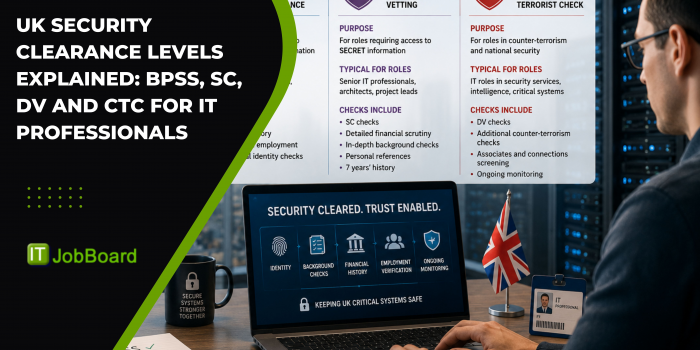
UK Security Clearance Levels Explained: BPSS, SC, DV and CTC for IT Professionals
Security clearance is an essential requirement for many IT professionals working with government departments, defence organisations, intelligence agencies, and critical national infrastructure providers across the UK.
As cyber threats continue to increase and digital transformation projects expand throughout the public sector, demand for security-cleared technology professionals remains strong. Many of the highest-paying technology roles in cyber security, cloud engineering, software development, infrastructure management, and data analysis now require some form of security clearance.
If you're considering a career in government technology, defence technology, or cyber security, understanding UK security clearance levels is essential.
This guide explains the various UK security clearance levels, who needs them, how they are obtained, and how they can benefit your IT career.
What Is Security Clearance?
Security clearance is a process used by the UK Government to assess whether an individual can be trusted with access to sensitive information, systems, assets, or locations.
The purpose is to protect national security and ensure that sensitive information is only accessible to appropriately vetted individuals.
Many employers cannot hire candidates for specific projects until the required level of clearance has been obtained.
As a result, security clearance has become a valuable career asset for technology professionals.
Why Security Clearance Matters for IT Professionals
Technology systems are now critical to national security.
Government agencies and private contractors require trusted professionals to manage:
- Cloud infrastructure
- Cyber security operations
- Network administration
- Software development
- Data management
- Defence systems
- Intelligence platforms
Security-cleared professionals often have access to:
- Higher salaries
- Exclusive job opportunities
- Long-term government contracts
- Reduced competition for vacancies
- Career advancement opportunities
For many IT professionals, obtaining clearance can significantly increase employability.
Overview of UK Security Clearance Levels
The most common security clearance levels include:
- BPSS (Baseline Personnel Security Standard)
- CTC (Counter Terrorist Check)
- SC (Security Check)
- DV (Developed Vetting)
Each level involves different screening requirements and grants access to varying levels of sensitive information.
BPSS (Baseline Personnel Security Standard)
BPSS is not technically a formal security clearance but is often considered the foundation of government vetting.
Most government employees, contractors, and suppliers must complete BPSS screening before accessing government systems or facilities.
BPSS Checks Include
- Identity verification
- Right-to-work checks
- Employment history verification
- Criminal record review
- Nationality assessment
Typical Roles Requiring BPSS
BPSS is often the first step before progressing to higher clearance levels.
CTC (Counter Terrorist Check)
CTC clearance is used for positions involving access to sensitive government facilities or information that could be vulnerable to terrorist threats.
The objective is to identify individuals who may present security risks.
CTC Screening Includes
- BPSS checks
- Criminal records assessment
- Security questionnaire
- Review of personal circumstances
Common Roles Requiring CTC
- Government IT Support
- Infrastructure Engineers
- Network Specialists
- Security Operations Staff
- Technical Project Personnel
CTC is common within transport, policing, and public sector environments.
SC (Security Check)
SC clearance is one of the most widely requested security clearances within the UK technology sector.
Many defence contractors and government technology suppliers require employees to hold SC clearance.
SC Clearance Includes
- BPSS screening
- Credit reference checks
- Criminal record review
- Security questionnaire
- Employment verification
- Background investigation
Roles Commonly Requiring SC Clearance
- Cloud Engineers
- Cyber Security Analysts
- Software Developers
- DevOps Engineers
- Systems Administrators
- Solutions Architects
- Data Engineers
SC-cleared professionals are highly sought after because obtaining clearance can take several months.
Employers often prefer candidates who already possess active SC clearance.
DV (Developed Vetting)
DV clearance represents the highest level of security clearance commonly available to technology professionals.
It is required for access to highly classified government information and intelligence assets.
DV Vetting Includes
- Extensive background checks
- Detailed financial review
- Security interviews
- Character references
- Family and personal relationship assessments
- Comprehensive investigation process
Roles Requiring DV Clearance
- Intelligence Technology Specialists
- National Security Cyber Experts
- Senior Security Architects
- Defence Infrastructure Engineers
- Advanced Threat Analysts
DV clearance is typically associated with highly sensitive government and intelligence work.
Who Can Apply for Security Clearance?
Individuals cannot usually apply directly for clearance.
A sponsoring organisation must initiate the process.
This means you generally need:
- A job offer
- A government contract role
- Employment with an approved organisation
The employer submits the clearance request as part of the hiring process.
Eligibility Requirements
While requirements vary depending on clearance level, applicants generally need:
Identity Verification
Applicants must prove their identity through official documentation.
Residency Requirements
Many clearance processes require a significant period of UK residency.
Employment History
Applicants must provide accurate employment records.
Criminal Record Review
Previous criminal convictions may be assessed during vetting.
Financial Assessment
Certain clearance levels include financial background checks.
The purpose is to identify potential vulnerabilities that could affect national security.
How Long Does Security Clearance Take?
Processing times vary significantly.
Typical Timeframes
|
Clearance Level
|
Estimated Processing Time
|
|
BPSS
|
Few days to several weeks
|
|
CTC
|
Several weeks
|
|
SC
|
Several weeks to several months
|
|
DV
|
Several months or longer
|
Processing times depend on workload, complexity, and individual circumstances.
Benefits of Holding Security Clearance
Many employers actively search for candidates who already possess clearance.
Benefits include:
More Job Opportunities
Many government contracts require immediate clearance eligibility.
Higher Salaries
Security-cleared professionals often command premium salaries.
Career Stability
Government and defence projects frequently offer long-term employment opportunities.
Reduced Competition
Clearance requirements naturally reduce the candidate pool.
Industries Hiring Security-Cleared IT Professionals
Demand extends far beyond traditional government departments.
Defence
Defence contractors regularly recruit:
- Software Engineers
- Cyber Security Analysts
- Cloud Specialists
Government
Departments continue investing heavily in digital transformation.
Cyber Security
Security-cleared cyber professionals remain in exceptionally high demand.
Critical Infrastructure
Utilities, transportation providers, and telecommunications organisations increasingly require vetted personnel.
Tips for Securing a Security-Cleared IT Role
Develop Technical Expertise
Employers seek candidates with strong technical skills alongside clearance eligibility.
Gain Relevant Certifications
Popular certifications include:
- AWS Certifications
- Microsoft Azure Certifications
- CISSP
- CompTIA Security+
- CEH
Maintain Accurate Records
Vetting processes require detailed personal and employment information.
Consider Contract Roles
Many contract opportunities offer security clearance sponsorship.
Future Demand for Security-Cleared IT Professionals
The UK's growing investment in cyber resilience, defence technology, artificial intelligence, and cloud infrastructure continues to drive demand for security-cleared professionals.
Roles requiring SC and DV clearance are expected to remain among the most secure and rewarding positions within the technology sector.
Professionals who combine technical expertise with active security clearance will continue to enjoy strong career prospects.
Conclusion
Understanding UK Security Clearance Levels is increasingly important for IT professionals seeking opportunities within government, defence, cyber security, and critical infrastructure sectors.
Whether you are pursuing BPSS, CTC, SC, or DV clearance, obtaining the appropriate vetting can unlock access to high-value roles, long-term career growth, and some of the UK's most exciting technology projects.
For professionals looking to advance their careers, security clearance is rapidly becoming one of the most valuable credentials in the UK technology job market.
FAQs
1. What is the most common security clearance for IT jobs in the UK?
SC (Security Check) clearance is the most commonly requested level for IT professionals working with government and defence contractors.
2. Can I apply for UK security clearance myself?
No. Security clearance must usually be sponsored by an employer, government department, or approved organisation.
3. How long does SC clearance take?
SC clearance can take several weeks to several months depending on the complexity of the checks and application volumes.
4. Do security-cleared IT professionals earn higher salaries?
Yes. Security-cleared professionals often receive higher salaries due to increased demand and a smaller talent pool.
5. Which IT roles commonly require security clearance?
Cloud Engineers, Cyber Security Analysts, Software Developers, DevOps Engineers, Solutions Architects, Infrastructure Engineers, and Data Specialists frequently require security clearance.