09/10/2026
What Is an AI Governance Analyst? Skills, Responsibilities and Career Path in the UK
Direct Answer
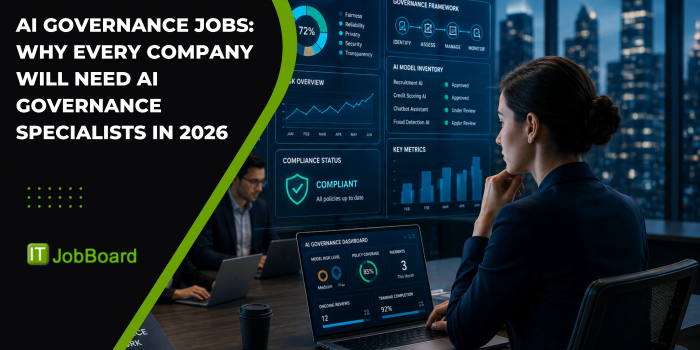
An AI Governance Analyst helps organisations manage how artificial intelligence is developed, deployed and used by establishing processes for risk, accountability, documentation, compliance, security, ethics and oversight.
The role sits between technology, business, risk and governance. An AI Governance Analyst may review AI use cases, assess risks, maintain AI inventories, document systems, support internal policies, monitor controls and work with technical and non-technical teams.
The role does not normally involve building AI models. Instead, it focuses on making sure AI systems are introduced and operated within appropriate organisational controls.
UK government guidance published in 2026 describes AI governance as covering areas including risk management, compliance, assurance, resource allocation, stakeholder engagement and alignment with business objectives and ethical principles.
For IT professionals, this creates a career pathway connecting AI, cybersecurity, data governance, compliance, risk management and technology operations.
What Does an AI Governance Analyst Do?
The exact responsibilities vary between organisations, but an AI Governance Analyst may work on:
- Reviewing proposed AI use cases
- Maintaining AI system inventories
- Assessing AI-related risks
- Supporting AI policies
- Documenting AI systems
- Reviewing data usage
- Supporting compliance assessments
- Monitoring governance controls
- Coordinating risk assessments
- Supporting AI audits
- Tracking remediation actions
- Reviewing model documentation
- Supporting human oversight processes
- Working with cybersecurity teams
- Communicating governance requirements to AI teams
- Preparing reports for governance committees
The role can therefore involve both technical understanding and governance processes.
What Is AI Governance?
AI governance refers to the structures, policies, processes and controls organisations use to manage AI responsibly.
It can cover the entire AI lifecycle:
Idea → Assessment → Development → Testing → Deployment → Monitoring → Review → Retirement
At each stage, governance questions can arise.
For example:
- Should this AI use case be approved?
- What data will the system use?
- What risks could it create?
- Who owns the system?
- How will performance be monitored?
- What happens if the AI produces an incorrect result?
- Where is human oversight required?
- What documentation should be retained?
The UK government's AI Risk Management Toolkit, published in September 2026, is intended to support people involved in designing, operating, procuring and delivering AI products and specifically addresses understanding and managing AI risks.
Why Is AI Governance Becoming Important?
AI systems are increasingly being integrated into everyday business processes.
Organisations may use AI for:
- Customer service
- Recruitment
- Document processing
- Software development
- Marketing
- Fraud detection
- Data analysis
- Financial processes
- Internal knowledge systems
- Decision support
The more widely AI is used, the more organisations need processes for understanding how those systems operate and managing associated risks.
Skills England's 2026 research says AI is becoming embedded in everyday working life across the UK while organisations still face challenges in building the skills needed to use AI effectively, safely and responsibly.
This creates demand for people who can connect AI adoption with appropriate governance practices.
What Skills Does an AI Governance Analyst Need?
1. AI Literacy
An AI Governance Analyst does not necessarily need to be an AI engineer.
However, they should understand concepts such as:
- Machine learning
- Generative AI
- Large language models
- AI agents
- Training data
- Inference
- Model evaluation
- AI limitations
- Hallucinations
- Bias
- Human oversight
Skills England identifies AI skills across three broad domains: technical, non-technical, and responsible or ethical skills.
That combination is particularly relevant to governance roles.
2. Risk Management
Risk assessment is a major part of AI governance.
An analyst may need to identify:
- Data risks
- Privacy risks
- Security risks
- Bias risks
- Operational risks
- Reliability risks
- Reputational risks
- Compliance risks
- Third-party risks
They may then document:
Risk → Impact → Likelihood → Control → Owner → Monitoring
The current UK AI Risk Management Toolkit is designed to help multidisciplinary teams understand, assess and manage risks when designing, procuring or delivering AI products.
3. Data Governance
AI systems depend heavily on data.
Useful data-governance knowledge includes:
- Data quality
- Data ownership
- Data classification
- Data privacy
- Data retention
- Data access
- Data lineage
- Data usage
- Data protection
An AI Governance Analyst may work with Data Governance teams to understand whether data is appropriate for a particular AI use case.
4. Cybersecurity
AI governance and cybersecurity increasingly overlap.
Relevant areas include:
- Access control
- Identity management
- Data security
- Secure AI deployment
- Prompt injection risks
- Model access
- Secrets management
- Third-party AI services
- Incident response
An analyst does not need to perform every security task themselves, but they should understand when cybersecurity specialists need to become involved.
5. Documentation
Documentation is one of the practical foundations of governance.
AI governance documentation can include:
- AI system descriptions
- Risk assessments
- Data sources
- System owners
- Model information
- Testing evidence
- Approval records
- Monitoring plans
- Incident records
- Review dates
Good documentation creates traceability around how AI systems are being used.
6. Communication
AI governance involves multiple teams.
An analyst may work with:
- AI Engineers
- Data Scientists
- Data Engineers
- Software Engineers
- Cybersecurity teams
- Legal teams
- Compliance teams
- Product Managers
- Business leaders
- Procurement teams
The ability to translate technical risks into understandable business language is therefore important.
What Is the Difference Between AI Governance and AI Compliance?
The terms overlap but are not identical.
AI governance is broader.
It can include:
- Policies
- Risk management
- Accountability
- Documentation
- Oversight
- Monitoring
- Ethics
- Security
- Compliance
AI compliance focuses more specifically on meeting applicable legal, regulatory, contractual or organisational requirements.
An AI Governance Analyst may therefore support compliance activities while also working on wider governance processes.
What Is the Difference Between an AI Governance Analyst and an AI Auditor?
An AI Governance Analyst generally helps establish and operate governance processes.
An AI Auditor may independently examine whether controls, processes or systems meet defined requirements.
For example:
|
AI Governance Analyst
|
AI Auditor
|
|
Supports governance processes
|
Examines governance controls
|
|
Helps maintain documentation
|
Reviews evidence
|
|
Supports risk assessments
|
Assesses control effectiveness
|
|
Tracks remediation
|
Reports audit findings
|
|
Helps implement policies
|
Provides audit assurance
|
|
Works throughout governance processes
|
Often works through formal review activities
|
There can be significant overlap depending on the organisation.
What Is the Difference Between an AI Governance Analyst and an AI Engineer?
The difference is primarily in the nature of the work.
An AI Engineer focuses on building and integrating AI systems.
An AI Governance Analyst focuses on the controls and processes surrounding AI use.
For example:
AI Engineer:
Builds an AI-powered application.
AI Governance Analyst:
Helps assess the application's risks, documentation, controls, ownership and monitoring requirements.
Both roles can therefore work together throughout the AI lifecycle.
What Tools Can AI Governance Analysts Use?
The tools vary significantly between employers.
An AI Governance Analyst may work with:
- Governance, risk and compliance platforms
- Documentation systems
- Workflow-management tools
- Data catalogues
- Model registries
- AI inventories
- Risk registers
- Audit-management platforms
- Policy-management systems
- Analytics dashboards
- Ticketing systems
The most important capability is understanding the governance workflow rather than simply knowing individual software products.
What Is an AI Inventory?
An AI inventory is a structured record of AI systems or AI use cases within an organisation.
It can contain information such as:
- AI system name
- Business owner
- Technical owner
- Purpose
- Supplier
- Data used
- Users
- Risk classification
- Deployment status
- Review date
- Monitoring requirements
Maintaining an inventory can help organisations understand where AI is being used and which systems require governance attention.
What Is AI Risk Assessment?
An AI risk assessment evaluates potential risks associated with an AI system or use case.
An analyst may ask:
- What does the AI system do?
- Who will use it?
- What data does it process?
- What decisions does it influence?
- What could go wrong?
- What controls are already available?
- What additional controls are required?
- Who owns the risk?
- How will the system be monitored?
The UK AI Risk Management Toolkit is specifically designed to support these types of multidisciplinary AI risk-management activities.
How Can You Become an AI Governance Analyst in the UK?
There is no single route into AI governance.
Route 1: Cybersecurity to AI Governance
A cybersecurity professional can develop AI governance knowledge.
Cybersecurity → Risk/Compliance → AI Governance
This route can be useful for people with experience in security controls and technology risk.
Route 2: Data Governance to AI Governance
Data professionals can build AI knowledge alongside existing governance experience.
Data Governance → AI/Data Risk → AI Governance Analyst
This can be relevant because AI systems frequently depend on organisational data.
Route 3: Business Analyst to AI Governance
Business Analysts already work with:
- Requirements
- Stakeholders
- Processes
- Documentation
- Risk
- Business change
They can add AI literacy and governance knowledge to move towards AI-focused governance roles.
Route 4: IT Compliance to AI Governance
Professionals working in technology compliance can develop specialist AI knowledge.
IT Compliance → Technology Risk → AI Governance
Do You Need to Know Coding?
Coding is not normally a core requirement for an AI Governance Analyst.
However, technical knowledge can be useful.
Understanding basic:
- Python
- SQL
- APIs
- Cloud computing
- Databases
- Machine learning
- Generative AI
can make it easier to communicate with engineering and data teams.
The objective is generally not to build the model yourself but to understand enough technology to evaluate governance questions appropriately.
Do You Need a Degree?
There is no universal degree requirement for AI governance.
Relevant backgrounds can include:
- Computer Science
- Cybersecurity
- Information Technology
- Data Science
- Business
- Law
- Risk Management
- Compliance
- Engineering
Professional experience in cybersecurity, data governance, technology risk, compliance or product management can also provide relevant foundations.
What Certifications Can Help?
Certification requirements vary by employer.
Potentially relevant areas include:
- Information security
- Risk management
- Data protection
- Privacy
- AI governance
- Responsible AI
- IT governance
- Audit
Rather than collecting certifications without practical experience, candidates can combine relevant training with real-world governance projects.
What Should You Put on an AI Governance CV?
An AI Governance CV can highlight experience with:
- AI risk assessments
- Technology risk
- Data governance
- Cybersecurity
- Compliance
- AI policies
- Risk registers
- Control frameworks
- Audit support
- AI documentation
- Stakeholder management
- Responsible AI
- Data protection
- AI system inventories
- Third-party risk
Where possible, describe the governance activity rather than simply listing a skill.
For example:
AI risk assessment → identified risks → documented controls → assigned owners → established review process
This gives employers more evidence of practical capability.
What Could an AI Governance Portfolio Project Include?
A useful portfolio project could simulate the governance process for an AI chatbot.
The project could include:
AI System Description
Explain what the chatbot does.
Risk Assessment
Identify potential:
- Privacy risks
- Security risks
- Accuracy risks
- Bias risks
- Operational risks
Data Assessment
Document:
- Data sources
- Data types
- Data ownership
- Retention considerations
Governance Controls
Define:
- Access controls
- Human oversight
- Monitoring
- Incident management
- Review frequency
AI Inventory Entry
Create a structured record containing:
- System owner
- Purpose
- Supplier
- Data used
- Risk level
- Approval status
- Review date
This can demonstrate practical understanding of AI governance without requiring you to build a sophisticated AI model.
What Is the Career Path for an AI Governance Analyst?
A possible progression is:
Junior Governance Analyst → AI Governance Analyst → Senior AI Governance Analyst → AI Governance Manager → Head of AI Governance
Professionals may also move into:
- AI Risk Management
- Technology Risk
- AI Compliance
- Responsible AI
- Data Governance
- Cybersecurity Governance
- AI Assurance
- Technology Audit
- AI Programme Management
The exact structure depends on the organisation.
Why Is Responsible AI Important for This Career?
Responsible AI involves understanding and managing the potential consequences of AI systems.
Skills England's current AI foundation framework explicitly includes responsible and ethical AI skills alongside technical and non-technical skills.
The UK's AI Management Essentials tool is also designed to help organisations establish management practices for developing and using AI systems and draws on principles from existing standards, frameworks and regulatory approaches.
For an AI Governance Analyst, responsible AI can therefore involve practical activities such as:
- Identifying risks
- Defining controls
- Supporting human oversight
- Documenting decisions
- Monitoring systems
- Escalating issues
- Reviewing changes
What Is the Future of AI Governance Careers in the UK?
AI governance is developing alongside wider AI adoption.
Skills England's 2026 annual report notes that AI-related capabilities are changing rapidly and highlights the importance of practical AI literacy, judgement, problem-solving, collaboration and responsible AI capabilities.
At the same time, the UK government's September 2026 AI Risk Management Toolkit provides practical guidance for multidisciplinary teams involved in AI design, procurement, operation and delivery.
This means AI governance is not limited to legal departments.
It can involve professionals across:
- IT
- Cybersecurity
- Data
- Risk
- Compliance
- Product
- Engineering
- Procurement
- Business operations
For IT professionals, AI governance can therefore become a specialist career path that combines technology knowledge with risk, accountability and responsible AI practices.
Key Takeaways
- An AI Governance Analyst helps organisations manage AI-related risks, controls, documentation and accountability.
- AI governance covers more than regulatory compliance.
- AI literacy, risk management, data governance and cybersecurity are useful skills.
- Coding is not normally essential, but technical understanding can be valuable.
- Cybersecurity, Business Analysis, Data Governance and IT Compliance can all provide pathways into AI governance.
- AI inventories, risk assessments and governance documentation are practical areas of work.
- Responsible and ethical AI skills are recognised within the UK's AI skills framework.
- The UK AI Risk Management Toolkit provides guidance for multidisciplinary teams managing AI risks.
- AI governance can lead into AI risk, compliance, assurance, technology governance and responsible AI careers.
FAQs
1. What is an AI Governance Analyst?
An AI Governance Analyst helps organisations manage the risks, controls, documentation, policies and accountability associated with developing and using artificial intelligence.
2. What skills does an AI Governance Analyst need?
Important skills include AI literacy, risk management, data governance, cybersecurity, compliance, documentation, responsible AI and stakeholder management.
3. Does an AI Governance Analyst need coding skills?
Coding is not normally essential. However, understanding technologies such as APIs, databases, cloud computing, Python, SQL and machine learning can help when working with technical teams.
4. How can I become an AI Governance Analyst in the UK?
You can enter AI governance from cybersecurity, data governance, business analysis, IT compliance, technology risk or other technology backgrounds. Developing AI literacy and responsible-AI knowledge can support the transition.
5. What does an AI Governance Analyst do?
An AI Governance Analyst may review AI use cases, assess risks, maintain AI inventories, document systems, support policies, monitor governance controls and coordinate with technical, legal, compliance and business teams.