04/09/2026
AI/ML Engineer Career Path UK: Skills, Jobs, Certifications and How to Get Started
An AI/ML Engineer in the UK builds, deploys, and maintains machine learning models in production systems, combining software engineering with applied machine learning, and the role is typically reached from a software development or data science background, with UK salaries ranging from around £45,000 for junior roles to £130,000+ for senior AI/ML engineers.
What Is an AI/ML Engineer?
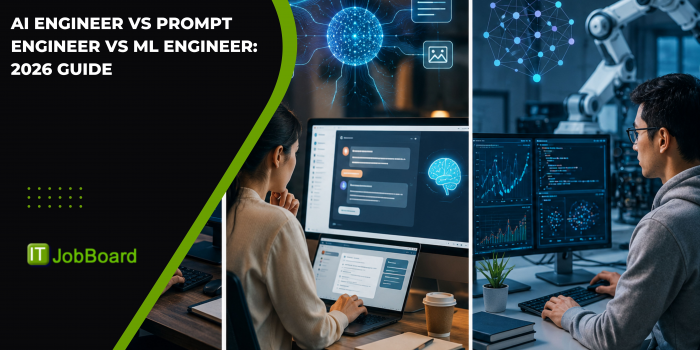
While Data Scientists focus on building and testing models, AI/ML Engineers focus on turning those models into reliable, scalable, production-ready systems. This distinction has become increasingly important as more UK companies move from experimenting with AI to deploying it at scale.
An AI/ML Engineer bridges the gap between data science and software engineering, and the role overlaps closely with the data foundations covered in our Data Engineer vs Data Analyst vs Data Scientist guide.
What Does an AI/ML Engineer Do?
Typical responsibilities include:
- Building and training machine learning models
- Deploying models into production environments
- Building ML pipelines for training, evaluation, and monitoring
- Optimising models for performance and cost
- Integrating AI capabilities into existing products and applications
- Monitoring deployed models for performance drift
- Collaborating with Data Scientists, Data Engineers, and Software Engineers
AI/ML Engineer vs Data Scientist
|
Area
|
Data Scientist
|
AI/ML Engineer
|
|
Primary focus
|
Building and testing models
|
Deploying and scaling models
|
|
Core skills
|
Statistics, experimentation
|
Software engineering, MLOps
|
|
Output
|
Insights, prototype models
|
Production-ready ML systems
|
|
Coding depth
|
Moderate to high
|
High
|
|
Typical background
|
Statistics, maths, research
|
Software engineering
|
What Skills Does an AI/ML Engineer Need?
- Programming — Python is the dominant language, with strong software engineering fundamentals (not just scripting).
- Machine Learning Frameworks — TensorFlow, PyTorch, and scikit-learn.
- MLOps — model versioning, monitoring, and deployment pipelines (MLflow, Kubeflow).
- Cloud Platforms — AWS, Azure, or GCP, particularly their AI/ML services (SageMaker, Azure Machine Learning, Vertex AI).
- Data Engineering Basics — understanding how to build and consume data pipelines efficiently.
- Containers — Docker and Kubernetes for deploying scalable ML services.
- Software Engineering Practices — version control, testing, CI/CD, and code review, since ML code needs the same rigour as any production software.
Which Certifications Help?
- AWS Certified Machine Learning – Specialty
- Microsoft Certified: Azure AI Engineer Associate
- Google Professional Machine Learning Engineer
- DeepLearning.AI TensorFlow Developer Certificate
Certifications are useful, but UK employers generally place higher value on a portfolio of deployed ML projects (for example, a model served through an API with monitoring) than on certificates alone.
AI/ML Engineer Salary in the UK (2026 Estimates)
|
Level
|
Salary Range
|
|
Junior AI/ML Engineer
|
£45,000 – £60,000
|
|
AI/ML Engineer
|
£60,000 – £90,000
|
|
Senior AI/ML Engineer
|
£90,000 – £120,000
|
|
Principal / Lead AI Engineer
|
£120,000 – £160,000+
|
AI/ML Engineering is currently one of the highest-paid specialisms in UK tech, driven by strong demand and a relatively limited pool of engineers with both machine learning and production software engineering skills.
How to Become an AI/ML Engineer in the UK
Two common entry routes:
From Software Engineering: Software Developer → learn machine learning fundamentals → build ML projects → AI/ML Engineer
From Data Science: Data Scientist → strengthen software engineering and MLOps skills → AI/ML Engineer
Steps to build toward this role:
- Build strong Python and software engineering fundamentals
- Learn core machine learning concepts and frameworks
- Build and deploy at least one end-to-end ML project (data → model → API → monitoring)
- Learn MLOps tools and cloud ML services
- Study containerisation and CI/CD for ML pipelines
- Apply for junior AI/ML engineering or hybrid ML/software roles
Career Progression Beyond AI/ML Engineer
Common next steps include:
- Senior/Principal AI Engineer
- ML Platform Engineer — combining AI/ML with the platform skills covered in our Platform Engineer Career Path UK guide
- Head of AI / AI Architect
- Research Scientist (for those who move toward more research-focused work)
Is AI/ML Engineering a Good Career in the UK?
AI/ML Engineering is currently one of the fastest-growing and highest-paid specialisms in UK technology, driven by rapid enterprise adoption of AI across sectors including finance, retail, and healthcare. The combination of strong salaries, high demand, and long-term growth potential makes it an attractive path for engineers willing to invest in both machine learning theory and production software engineering skills.
Frequently Asked Questions
What is the difference between a Data Scientist and an AI/ML Engineer?
Data Scientists focus on building and testing models using statistics and experimentation, while AI/ML Engineers focus on deploying and scaling those models in production systems.
Do I need a maths or computer science degree to become an AI/ML Engineer?
Not necessarily. Many AI/ML Engineers build their skills through online courses, practical projects, and software engineering experience rather than a formal degree.
Which programming language is most important for AI/ML Engineering?
Python is the dominant language used across machine learning frameworks, tooling, and cloud AI services.
Is AI/ML Engineering in high demand in the UK?
Yes, demand has grown rapidly as UK companies move from experimenting with AI to deploying it in production systems.
Can a software developer become an AI/ML Engineer?
Yes. Software developers who learn machine learning fundamentals and build practical ML projects are well positioned to move into AI/ML engineering roles.
What is MLOps?
MLOps refers to the practices and tools used to deploy, monitor, and maintain machine learning models reliably in production, similar to how DevOps applies to traditional software.