07/10/2026
What Is an MLOps Engineer? Skills, Tools and Career Path for UK IT Professionals
Direct Answer
An MLOps Engineer is a technology professional who helps organisations deploy, monitor, maintain and improve machine-learning systems in production.
MLOps stands for Machine Learning Operations. It combines principles from machine learning, software engineering, DevOps, cloud computing, data engineering and automation to manage the lifecycle of machine-learning models.
An MLOps Engineer can help move a machine-learning model from development into a reliable production environment and maintain it after deployment.
The UK occupational standard for Machine Learning Engineers includes “machine learning operations engineer” among typical job titles and describes work involving the deployment, testing, updating, monitoring and maintenance of machine-learning systems.
What Does an MLOps Engineer Do?
An MLOps Engineer focuses on the operational side of machine learning.
Typical responsibilities can include:
- Deploying machine-learning models
- Automating model deployment
- Monitoring model performance
- Monitoring production infrastructure
- Supporting continuous integration and delivery
- Managing cloud infrastructure
- Troubleshooting production problems
- Supporting security and compliance
The exact responsibilities vary according to the organisation and its technology stack.
Why Is MLOps Important?
Building a machine-learning model is only one part of an AI project.
A model may perform well during development but encounter different conditions when deployed.
For example:
- Production data may change.
- User behaviour may change.
- Data quality may decline.
- Model performance may deteriorate.
- Infrastructure may experience failures.
- An updated model may produce different results.
MLOps provides processes for managing these issues.
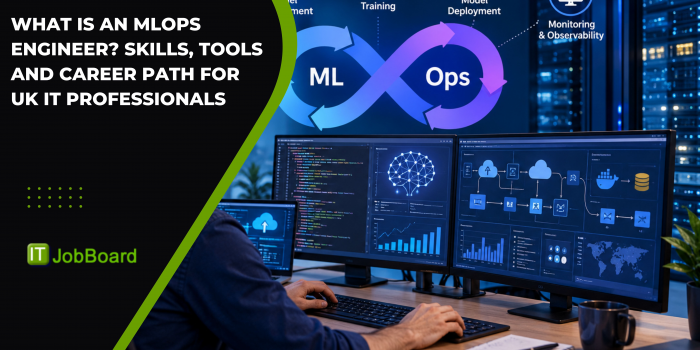
A simplified machine-learning lifecycle can be represented as:
Data → Model Development → Testing → Deployment → Monitoring → Updating → Retesting
MLOps helps organisations manage this lifecycle systematically.
MLOps vs DevOps: What Is the Difference?
MLOps and DevOps share several practices, including automation, CI/CD, infrastructure management, monitoring and version control.
However, machine-learning systems introduce additional considerations.
|
DevOps
|
MLOps
|
|
Software deployment
|
ML model and software deployment
|
|
Application monitoring
|
Application and model monitoring
|
|
Code versioning
|
Code, data and model versioning
|
|
Software testing
|
Software and model testing
|
|
Infrastructure
|
ML infrastructure
|
|
CI/CD
|
CI/CD and ML pipelines
|
|
Application performance
|
Application and model performance
|
MLOps therefore extends many DevOps principles into machine-learning workflows.
What Skills Does an MLOps Engineer Need?
1. Machine Learning Fundamentals
An MLOps Engineer should understand the basic machine-learning lifecycle.
Useful knowledge includes:
The engineer does not necessarily need to specialise in developing every type of ML model, but understanding how models behave is important.
2. Software Engineering
Strong software engineering fundamentals can help with:
Python is particularly relevant to many machine-learning environments.
3. DevOps
MLOps overlaps significantly with DevOps.
Useful areas include:
4. Cloud Computing
Many modern ML systems operate using cloud infrastructure.
Knowledge of cloud concepts such as:
- Identity and access management
can therefore be valuable.
5. Data Engineering
Machine-learning systems depend on reliable data.
MLOps professionals may work with:
6. Monitoring and Observability
Monitoring is a major part of production ML.
An MLOps Engineer may monitor:
What Is Model Drift?
Model drift occurs when the data or patterns a machine-learning model encounters change over time, potentially affecting its performance.
For example, a model trained using historical customer behaviour may become less accurate if customer behaviour changes significantly.
An MLOps process can help identify such changes through monitoring and evaluation.
This is one reason why deploying a model is not the end of the machine-learning lifecycle.
What Tools Can MLOps Engineers Use?
The tools depend on the organisation.
An MLOps environment may include:
- Infrastructure-as-code tools
- Machine-learning platforms
Rather than focusing only on individual tools, candidates should understand the underlying concepts:
build → test → deploy → monitor → update.
MLOps vs Machine Learning Engineer
The roles overlap considerably.
A Machine Learning Engineer may focus on designing, building, deploying and validating ML solutions.
An MLOps Engineer can have a stronger focus on the operational lifecycle, including deployment automation, infrastructure, monitoring and maintaining production ML systems.
However, organisations do not always separate the roles in the same way.
The UK Machine Learning Engineer occupational standard itself includes deployment, testing, monitoring and maintaining ML systems and lists “machine learning operations engineer” among typical job titles.
MLOps vs Data Scientist
A Data Scientist generally focuses more heavily on:
An MLOps Engineer focuses more heavily on:
- Production infrastructure
- Model lifecycle management
In larger organisations, the two roles may work closely together.
How Can You Become an MLOps Engineer in the UK?
There is no single route into MLOps.
Several technology backgrounds can provide a foundation.
Route 1: DevOps to MLOps
A DevOps professional can develop:
Machine learning fundamentals + Python + ML pipelines + model deployment
Route 2: Software Engineering to MLOps
A developer can build:
Python + cloud + ML fundamentals + deployment + monitoring
Route 3: Machine Learning to MLOps
A Machine Learning Engineer can develop deeper knowledge of:
CI/CD + infrastructure + containers + cloud + production monitoring
Route 4: Data Engineering to MLOps
A Data Engineer can add:
Machine learning + model lifecycle + model deployment + ML monitoring
This makes MLOps a multidisciplinary career area.
Do MLOps Engineers Need a Degree?
Not every employer will have the same requirements.
Relevant educational backgrounds can include:
Practical experience is also important because MLOps requires professionals to connect several technical areas.
The UK has an approved Level 6 Machine Learning Engineer apprenticeship standard, which includes designing, building, deploying and validating machine-learning or AI solutions.
This demonstrates that machine-learning engineering can be entered through an apprenticeship route as well as traditional higher education.
What Certifications Can Help?
The most useful certification depends on the candidate's existing background.
Potential areas include:
Certifications can demonstrate structured learning, but practical projects can also help candidates demonstrate their ability to deploy and operate ML systems.
What Projects Can Help Build an MLOps Portfolio?
A practical portfolio project could demonstrate the complete lifecycle of a machine-learning model.
For example:
Dataset → Model → Testing → API → Container → Deployment → Monitoring
A project could include:
This demonstrates more than simply training a model in a notebook.
What Is the Career Path for an MLOps Engineer?
A potential career progression could be:
DevOps Engineer → MLOps Engineer → Senior MLOps Engineer → ML Platform Engineer → AI Platform Engineer
Another route could be:
Machine Learning Engineer → MLOps Engineer → Senior MLOps Engineer → ML Infrastructure Lead
Other related titles may include:
- Machine Learning Engineer
- Machine Learning Operations Engineer
- ML Infrastructure Engineer
- AI Infrastructure Engineer
Because job titles vary between employers, candidates should search for related roles rather than relying on one exact title.
What Industries Use MLOps?
MLOps can be relevant wherever organisations deploy machine-learning systems.
Potential sectors include:
The specific MLOps requirements will depend on the type of ML applications being operated.
What Should You Put on an MLOps CV?
An MLOps CV can highlight experience in:
Where possible, candidates should describe practical outcomes rather than simply listing tools.
For example, instead of:
“Experience with machine learning and Docker.”
A stronger project description could explain that a machine-learning model was containerised, tested and deployed through an automated pipeline.
What Is the Future of MLOps?
The UK technology skills landscape is changing as AI becomes more widely integrated into software and business processes.
Skills England reports that AI adoption is reshaping digital roles and increasing demand for capabilities such as technical AI skills, data literacy, orchestration, assurance and cross-functional collaboration.
MLOps sits directly within this intersection because it requires both AI knowledge and the engineering skills needed to operate AI systems reliably.
The UK government's Machine Learning Engineer occupational standard also explicitly recognises production deployment, monitoring, updating and lifecycle management as part of the occupation.
Key Takeaways
- MLOps means Machine Learning Operations.
- MLOps Engineers help deploy, monitor and maintain machine-learning systems.
- The role combines machine learning, software engineering, DevOps, cloud and data engineering.
- Python, cloud, CI/CD, containers and monitoring are useful technical skills.
- Model drift and data quality are important production considerations.
- DevOps, software, data and ML professionals can develop skills for MLOps roles.
- The UK Machine Learning Engineer occupational standard recognises Machine Learning Operations Engineer as a typical job title.
- Related job titles can include ML Platform Engineer, AI Platform Engineer and ML Infrastructure Engineer.
Frequently Asked Questions
What is an MLOps Engineer?
An MLOps Engineer helps deploy, operate, monitor and maintain machine-learning systems in production.
What skills does an MLOps Engineer need?
Important skills can include machine learning fundamentals, Python, software engineering, DevOps, cloud computing, CI/CD, data pipelines and monitoring.
Is MLOps the same as DevOps?
No. MLOps uses many DevOps principles but applies them to machine-learning systems, adding considerations such as model deployment, model monitoring and data management.
Can a DevOps Engineer become an MLOps Engineer?
Yes. DevOps provides a useful foundation in automation, deployment, infrastructure and monitoring. Additional machine-learning and data knowledge can support the transition.
Is MLOps the same as Machine Learning Engineering?
The roles overlap. Machine Learning Engineers can design, build, deploy and validate ML solutions, while MLOps often places greater emphasis on production operations, automation, infrastructure and lifecycle management.