03/06/2026
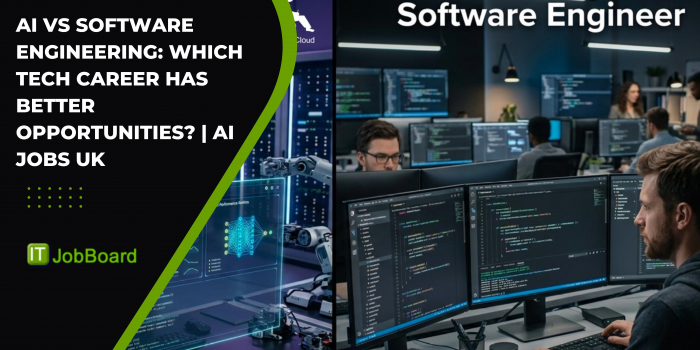
AI vs Software Engineering: Which Tech Career Has Better Opportunities?
The technology industry is evolving rapidly, creating exciting career opportunities for professionals with technical skills. Two of the most popular and fastest-growing career paths today are Artificial Intelligence (AI) and Software Engineering. Both fields offer excellent salaries, strong job demand, and long-term career growth. However, many aspiring technology professionals are unsure which path provides better opportunities.
The rise of AI jobs UK has generated significant interest among students, graduates, and experienced IT professionals. At the same time, software engineering remains one of the most stable and widely available career options within the technology sector.
If you're considering a career in technology, understanding the differences between AI and software engineering can help you make an informed decision about your future.
Understanding Artificial Intelligence Careers
Artificial Intelligence focuses on creating systems that can perform tasks typically requiring human intelligence.
Examples include:
- Machine learning
- Natural language processing
- Computer vision
- Predictive analytics
- Generative AI systems
- Recommendation engines
AI professionals develop algorithms and models that enable machines to learn from data and improve performance over time.
Common AI Job Titles
Professionals working in AI jobs UK may hold roles such as:
- AI Engineer
- Machine Learning Engineer
- Data Scientist
- AI Research Scientist
- Computer Vision Engineer
- NLP Engineer
These positions often involve working with advanced technologies and large datasets.
Understanding Software Engineering Careers
Software engineering focuses on designing, building, testing, and maintaining software applications.
Software engineers create:
- Websites
- Mobile applications
- Enterprise software
- Cloud platforms
- Business systems
- Consumer applications
Software engineering remains one of the largest employment categories within the technology industry.
Common Software Engineering Roles
Examples include:
- Software Engineer
- Full Stack Developer
- Backend Developer
- Front-End Developer
- Mobile App Developer
- Systems Developer
Software engineers are essential across nearly every industry.
Why AI Jobs UK Are Growing Rapidly
Artificial Intelligence has become a major investment area for organisations worldwide.
Businesses are adopting AI to improve:
- Customer experiences
- Automation
- Data analysis
- Decision-making
- Operational efficiency
Industries investing heavily in AI include:
- Healthcare
- Finance
- Retail
- Manufacturing
- Logistics
- Technology
As a result, demand for AI specialists continues to increase.
Why Software Engineering Remains Essential
Despite growing interest in AI, software engineering remains the foundation of the technology industry.
Every digital product requires software engineers to:
- Build applications
- Maintain systems
- Develop infrastructure
- Create user experiences
- Integrate technologies
Even AI systems require software engineers to develop platforms, interfaces, and deployment environments.
This ongoing demand makes software engineering one of the most stable technology careers.
Skills Required for AI Careers
AI professionals often require advanced technical skills.
Programming Languages
Common languages include:
Mathematics and Statistics
AI development relies heavily on:
- Linear algebra
- Probability
- Statistics
- Calculus
Machine Learning Frameworks
Popular tools include:
- TensorFlow
- PyTorch
- Scikit-learn
Data Analysis
Understanding data preparation and modelling is critical.
AI professionals often spend significant time working with data.
Skills Required for Software Engineering Careers
Software engineering focuses on application development and system design.
Programming Languages
Common choices include:
- JavaScript
- Python
- Java
- C#
- PHP
Software Development Principles
Important concepts include:
- Object-oriented programming
- Version control
- Software testing
- System architecture
Cloud Computing
Many software engineers work with:
Collaboration Tools
Software development teams frequently use:
- Git
- Jira
- Agile methodologies
Which Career Has More Job Opportunities?
Software Engineering
Software engineering currently offers a larger number of available roles.
Reasons include:
- Broad industry adoption
- Diverse applications
- Continuous software demand
Virtually every organisation requires software development expertise.
Artificial Intelligence
AI roles are growing rapidly but remain more specialised.
Many AI positions require:
- Advanced technical knowledge
- Data science expertise
- Machine learning experience
While AI opportunities are expanding, software engineering still provides a larger overall job market.
Salary Comparison
Salary is often an important consideration.
AI Engineer Salary UK
AI professionals frequently earn premium salaries due to specialised skills and high demand.
Senior AI specialists can command particularly attractive compensation packages.
Software Engineer Salary UK
Software engineers also enjoy strong earning potential.
Factors influencing salaries include:
- Experience
- Industry
- Location
- Technical expertise
While both fields offer excellent compensation, highly specialised AI professionals often achieve higher average salaries.
Education and Entry Requirements
AI Careers
AI roles often favour candidates with backgrounds in:
- Computer Science
- Mathematics
- Data Science
- Engineering
Some positions may require advanced qualifications.
Software Engineering Careers
Software engineering often offers more flexible entry routes.
Candidates may enter through:
- Degrees
- Bootcamps
- Apprenticeships
- Self-learning
- Professional certifications
This accessibility makes software engineering attractive to career changers.
Remote Working Opportunities
Both careers support flexible working arrangements.
AI Roles
Many AI professionals work remotely due to the digital nature of their work.
Software Engineering Roles
Software development remains one of the most remote-friendly professions.
Remote software engineer jobs continue to be widely available across the UK.
Career Progression Opportunities
AI Career Path
Professionals may progress into roles such as:
- Senior AI Engineer
- Lead Data Scientist
- AI Architect
- Head of AI
Software Engineering Career Path
Common progression routes include:
- Senior Software Engineer
- Technical Lead
- Engineering Manager
- Solutions Architect
Both paths offer excellent advancement opportunities.
Which Career Is Easier to Enter?
For beginners, software engineering is generally more accessible.
Reasons include:
- More entry-level opportunities
- Wider range of learning resources
- Flexible educational requirements
- Larger job market
AI careers often require deeper knowledge of mathematics, machine learning, and data science.
Many professionals begin as software engineers before transitioning into AI-related roles.
Future Outlook for AI Jobs UK
Artificial Intelligence is expected to remain a major growth area.
Emerging technologies driving demand include:
- Generative AI
- Autonomous systems
- Intelligent automation
- Predictive analytics
As adoption increases, organisations will continue recruiting AI specialists.
Future Outlook for Software Engineering
Software engineering demand is also expected to remain strong.
Key growth areas include:
- Cloud computing
- Mobile applications
- Cybersecurity
- Enterprise software
- Digital transformation
Software engineers will continue playing a critical role in technology innovation.
AI vs Software Engineering: Which Should You Choose?
The right choice depends on your interests and strengths.
Choose AI if you enjoy:
- Mathematics
- Data analysis
- Research
- Machine learning
- Advanced technologies
Choose Software Engineering if you enjoy:
- Building applications
- Solving practical problems
- Creating digital products
- Software development
Many professionals combine both skill sets as their careers progress.
Conclusion
Both AI jobs UK and software engineering careers offer excellent opportunities within the technology industry. AI provides exciting growth potential, cutting-edge innovation, and strong salaries, while software engineering offers broader job availability, accessibility, and long-term stability.
For those starting their technology journey, software engineering often provides a more straightforward entry point. However, individuals with strong analytical skills and an interest in machine learning may find AI careers highly rewarding. Regardless of the path you choose, continuous learning and skill development will remain essential for long-term success in the rapidly evolving technology landscape.
FAQs
1. Are AI jobs growing in the UK?
Yes. AI jobs UK are growing rapidly as businesses adopt machine learning, automation, and advanced analytics technologies.
2. Do AI engineers earn more than software engineers?
In many cases, experienced AI professionals earn higher salaries due to specialised skills and strong market demand.
3. Is software engineering easier to enter than AI?
Generally, yes. Software engineering offers more entry-level opportunities and flexible learning pathways.
4. Do AI jobs require advanced mathematics?
Many AI roles require knowledge of statistics, probability, and machine learning concepts.
5. Which career has better long-term prospects?
Both careers have excellent long-term prospects. AI is growing rapidly, while software engineering remains essential across all industries.