21/07/2026
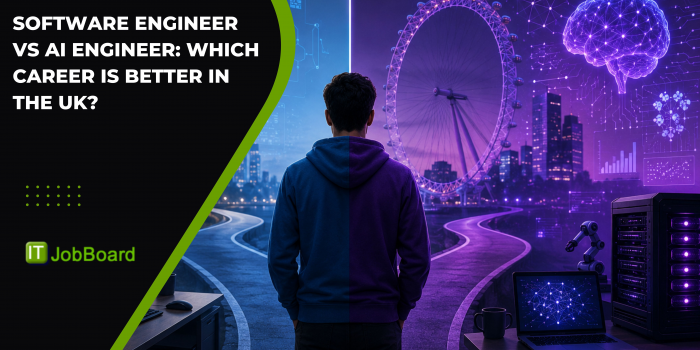
AI Engineer vs Software Engineer: Which Career Will Grow Faster in the UK?
The debate around AI Engineer vs Software Engineer has become increasingly important as businesses across the UK invest heavily in artificial intelligence, automation, and digital transformation. While software engineering remains one of the most stable and in-demand professions, AI engineering is rapidly emerging as one of the fastest-growing specialisations in technology. If you're deciding between these two career paths, understanding their responsibilities, salaries, required skills, and long-term prospects can help you make an informed decision.
Whether you're a graduate, an experienced developer looking to specialise, or someone planning a career switch, both roles offer exciting opportunities. However, the best choice depends on your interests, technical strengths, and career goals.
Understanding the Role of a Software Engineer
Software Engineers design, build, test, and maintain applications that power websites, mobile apps, enterprise platforms, financial systems, healthcare software, and countless other digital products.
A Software Engineer typically works with programming languages such as:
- Java
- Python
- C#
- JavaScript
- Go
- Kotlin
Daily responsibilities often include:
- Designing scalable applications
- Writing clean and maintainable code
- Fixing bugs and improving performance
- Collaborating with product managers and designers
- Building APIs and cloud-based services
- Participating in code reviews and Agile development
Software engineering remains the foundation of the modern technology industry. Nearly every organisation requires skilled developers, making this one of the most reliable future tech jobs in the UK.
What Does an AI Engineer Do?
An AI Engineer focuses on creating intelligent systems capable of learning from data, recognising patterns, making predictions, and automating complex tasks.
Unlike traditional software development, AI Engineers combine programming with machine learning, mathematics, and data science.
Their responsibilities include:
- Building Machine Learning models
- Developing AI-powered applications
- Training Large Language Models (LLMs)
- Working with Natural Language Processing (NLP)
- Building recommendation systems
- Deploying AI models into production
- Improving model accuracy through continuous learning
AI Engineers commonly use technologies including:
- Python
- TensorFlow
- PyTorch
- Scikit-learn
- Hugging Face
- OpenAI APIs
- Azure AI Services
- AWS SageMaker
As organisations increasingly integrate AI into their products and operations, demand for professionals with practical AI expertise continues to rise. This growth is reflected across many AI jobs UK, where employers are seeking candidates who can bridge software engineering and machine learning.
AI Engineer vs Software Engineer: Key Differences
Although both careers involve programming, their primary objectives differ.
|
Feature
|
AI Engineer
|
Software Engineer
|
|
Primary Focus
|
Intelligent systems
|
Software applications
|
|
Main Languages
|
Python, R
|
Java, C#, Python, JavaScript
|
|
Core Skills
|
Machine Learning, Deep Learning, NLP
|
Software Development, APIs, Databases
|
|
Mathematics
|
High
|
Moderate
|
|
Data Analysis
|
Essential
|
Helpful
|
|
AI Model Development
|
Yes
|
Rarely
|
|
Software Architecture
|
Moderate
|
Extensive
|
|
Application Development
|
Yes
|
Primary responsibility
|
Many companies now expect software engineers to understand basic AI concepts, while AI Engineers benefit greatly from strong software engineering principles. The distinction between these roles is becoming increasingly blurred as AI capabilities are embedded into mainstream applications.
Skills Required for Each Career
Essential Software Engineering Skills
To succeed as a Software Engineer, employers typically look for:
- Object-Oriented Programming
- System Design
- REST APIs
- Git and version control
- SQL and NoSQL databases
- Cloud platforms
- Testing frameworks
- Agile methodologies
Strong problem-solving and communication skills are equally valuable, especially when working within cross-functional development teams.
Essential AI Engineering Skills
For an AI Engineer, technical requirements extend beyond coding.
Important skills include:
- Machine Learning algorithms
- Deep Learning
- Neural Networks
- Statistics
- Linear Algebra
- Data Processing
- Python programming
- TensorFlow or PyTorch
- Model deployment
- MLOps concepts
Because AI evolves rapidly, continuous learning is an essential part of the AI career path.
Which Career Has Better Job Demand?
Software Engineering continues to dominate recruitment across industries including finance, healthcare, retail, cybersecurity, government, manufacturing, and telecommunications.
However, AI hiring has accelerated dramatically over the past few years.
Businesses are investing in:
- AI-powered customer service
- Predictive analytics
- Intelligent automation
- Generative AI applications
- Fraud detection
- Personalisation engines
Rather than replacing Software Engineers, AI is creating new specialist roles while increasing demand for developers who understand AI technologies. Many organisations are now specifically recruiting professionals who can combine software development expertise with artificial intelligence skills.
If you browse current AI jobs UK, you'll notice employers increasingly value candidates who can integrate AI models into production-ready software rather than simply build experimental machine learning models.
Salary Comparison
Salary is often one of the biggest deciding factors when comparing AI Engineer vs Software Engineer.
Software Engineers typically enjoy stable salary progression, with earnings increasing based on experience, programming expertise, and leadership responsibilities. Senior engineers, technical architects, and engineering managers can command highly competitive packages.
AI Engineers, however, often receive premium salaries because of the specialised expertise required. Employers are willing to pay more for professionals who can develop production-ready AI solutions, optimise machine learning models, and implement advanced automation systems.
That said, salary should not be the only consideration. The best long-term career is one that aligns with your interests and strengths. Software engineering offers broader opportunities across virtually every sector, while AI engineering provides a more specialised route with significant growth potential.
For current salary benchmarks and labour market insights, the UK Government's labour market resources and the UK Office for National Statistics (ONS) provide valuable information on employment trends and high-demand occupations. They can complement salary research alongside current job listings to help you understand where the market is heading.
Which Career Is More Future-Proof?
When comparing AI Engineer vs Software Engineer, one of the biggest questions is which profession is likely to remain relevant over the next decade.
The answer isn't as simple as choosing one over the other. Artificial intelligence is transforming the software industry, but it still relies on robust software engineering principles. AI systems need scalable applications, secure APIs, cloud infrastructure, and reliable deployment pipelines—all areas where Software Engineers excel.
Why Software Engineering Will Continue to Grow
Software Engineers remain essential because every digital product requires:
- Application architecture
- Backend development
- Frontend interfaces
- Cloud integration
- Security implementation
- Performance optimisation
- Continuous maintenance
From banking and healthcare to retail and government services, organisations will continue hiring developers to build and improve software products. Even AI-powered applications require skilled Software Engineers to bring them to market.
Why AI Engineering Is Growing Faster
AI Engineering, however, is expanding at an exceptional pace.
Companies are increasingly investing in:
- Generative AI applications
- Intelligent automation
- Predictive analytics
- AI-powered chatbots
- Computer vision
- Recommendation engines
- Large Language Models (LLMs)
As a result, demand for experienced AI Engineers is rising across startups, technology companies, financial institutions, healthcare providers, and public sector organisations.
The UK's National AI Strategy and continued investment in artificial intelligence are expected to create even more opportunities for professionals with advanced AI expertise.
Can a Software Engineer Become an AI Engineer?
Absolutely.
In fact, many successful AI Engineers began their careers as Software Engineers.
This transition is often smoother because Software Engineers already possess valuable skills such as:
- Programming
- Algorithms
- Version control
- Cloud computing
- API development
- Software architecture
- Problem-solving
To transition into AI Engineering, professionals usually expand their knowledge in:
- Machine Learning
- Statistics
- Deep Learning
- Natural Language Processing
- Data Engineering
- Model Deployment
- MLOps
Python is generally the preferred language for AI development, making it an excellent starting point for Software Engineers interested in artificial intelligence.
Which Skills Should You Learn First?
If you're still deciding between the two careers, focus on building strong programming fundamentals before specialising.
Start with Software Engineering Skills
Learn:
- Python
- Java
- Git
- SQL
- REST APIs
- Object-Oriented Programming
- Data Structures
- Algorithms
These skills form the foundation for both Software Engineering and AI Engineering careers.
Then Explore AI Technologies
Once you're comfortable with software development, begin learning:
- Machine Learning
- TensorFlow
- PyTorch
- Pandas
- NumPy
- Prompt Engineering
- AI APIs
- MLOps
Employers increasingly value professionals who understand both traditional software development and artificial intelligence.
Which Career Is Easier to Start?
For most beginners, Software Engineering has a lower barrier to entry.
There are:
- More graduate programmes
- More junior positions
- More online learning resources
- Greater variety of industries hiring developers
AI Engineering often requires additional knowledge of mathematics, data science, and machine learning, making it more specialised.
However, this specialisation can also lead to higher demand and greater earning potential once you've gained experience.
Which Career Offers Better Long-Term Growth?
Both careers have excellent long-term prospects, but they grow in different ways.
Software Engineering
Advantages include:
- Large number of available jobs
- Broad industry demand
- Flexible career progression
- Opportunities in startups and enterprise organisations
- Easier transition into management or architecture roles
AI Engineering
Advantages include:
- Rapid market growth
- Premium salaries
- Cutting-edge technologies
- High demand across multiple industries
- Opportunity to work on innovative products
If your goal is stability and flexibility, Software Engineering remains one of the strongest career choices.
If you're passionate about artificial intelligence and enjoy solving complex data-driven problems, AI Engineering could offer faster career growth.
AI Engineer vs Software Engineer: Which Should You Choose?
The right choice depends on your interests, learning style, and long-term goals.
Choose Software Engineering if you enjoy:
- Building applications
- Writing production-ready code
- Designing scalable systems
- Working across different industries
- Solving software problems
Choose AI Engineering if you're interested in:
- Machine Learning
- Artificial Intelligence
- Data modelling
- Neural Networks
- Predictive analytics
- Building intelligent applications
Remember, these careers are no longer completely separate. Many employers now seek professionals who can combine software engineering expertise with AI capabilities.
Developing skills in both areas can significantly improve your career prospects in the evolving technology job market.
Final Verdict
The comparison between AI Engineer vs Software Engineer isn't about deciding which career is "better"—it's about choosing the path that aligns with your interests and ambitions.
Software Engineering continues to offer exceptional career stability, a wide range of opportunities, and strong salary progression. It remains one of the most accessible and versatile careers in technology.
AI Engineering, meanwhile, represents one of the fastest-growing specialisations in the UK. As businesses increasingly adopt artificial intelligence, professionals with AI expertise are likely to enjoy expanding opportunities and competitive salaries.
For many aspiring professionals, the smartest approach is to begin with strong software engineering fundamentals and gradually build AI skills. This combination creates a future-ready profile that employers increasingly value as artificial intelligence becomes part of everyday software development.
Whether you're searching for AI jobs UK, comparing the Software Engineer salary UK, planning your AI career path, or exploring future tech jobs, investing in continuous learning and practical experience will help you stay competitive in the evolving IT industry.
For readers looking to understand broader trends in AI adoption and the skills employers value, the Alan Turing Institute offers valuable research and insights into artificial intelligence in the UK: https://www.turing.ac.uk/
Frequently Asked Questions
Is AI Engineering better than Software Engineering?
Neither career is universally better. Software Engineering offers broader opportunities across industries, while AI Engineering provides specialised roles with strong growth potential. Your choice should depend on your interests, technical strengths, and career goals.
Do AI Engineers earn more than Software Engineers in the UK?
AI Engineers often command higher salaries due to the specialised skills required in machine learning, data science, and AI model development. However, experienced Software Engineers, Architects, and Engineering Managers can also earn highly competitive salaries.
Can a Software Engineer transition into AI Engineering?
Yes. Many AI Engineers begin as Software Engineers and later specialise by learning machine learning, Python, statistics, deep learning, and MLOps.
Which programming language is best for AI Engineering?
Python is the most widely used language for AI development because of its extensive ecosystem, including TensorFlow, PyTorch, Scikit-learn, and other machine learning libraries.
Is AI replacing Software Engineers?
No. AI is changing how software is developed, but Software Engineers remain essential for designing, building, testing, deploying, and maintaining applications. AI is more likely to enhance developer productivity than replace the profession.