15/07/2026
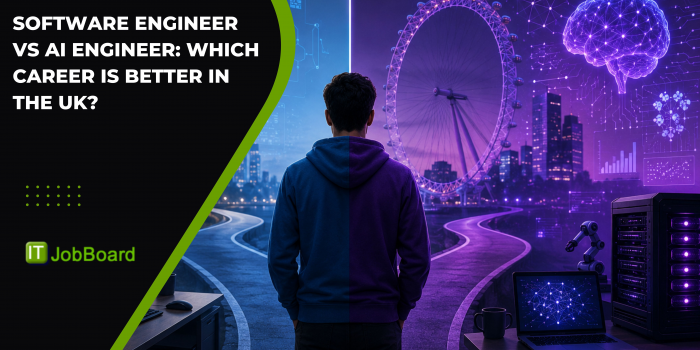
Software Engineer vs AI Engineer: Which Career Is Better in the UK?
The debate around Software Engineer vs AI Engineer has become one of the most popular career discussions in the UK technology industry. As artificial intelligence continues transforming businesses across finance, healthcare, retail, manufacturing, and cybersecurity, professionals are wondering whether traditional software engineering or AI engineering offers better long-term opportunities.
While both careers are highly respected and well-paid, they differ significantly in terms of daily responsibilities, required skills, career progression, and future demand. Understanding these differences can help graduates, experienced developers, and career changers make informed decisions about their professional future.
Whether you're exploring Software Engineer Jobs UK or considering a move into AI Engineer Jobs UK, knowing how these roles compare is essential in today's rapidly evolving technology landscape.
Why This Comparison Matters
Artificial intelligence is no longer limited to research labs or major technology companies. Organisations of every size are adopting AI-powered solutions to automate processes, improve customer experiences, and analyse large volumes of data.
However, despite AI's rapid growth, software engineering remains the backbone of every digital product and service. Every mobile app, website, enterprise platform, cloud application, and business system still requires skilled software engineers.
Rather than replacing software engineers, AI is creating new specialisations within software development.
For job seekers, this means there are more career opportunities than ever before—but choosing the right path depends on your interests, strengths, and long-term goals.
What Does a Software Engineer Do?
Software engineers design, build, test, and maintain applications used by businesses and consumers. Their work involves developing reliable, scalable, and secure software solutions that solve real-world problems.
Typical responsibilities include:
- Designing software architecture
- Writing clean, maintainable code
- Debugging applications
- Developing APIs
- Managing databases
- Collaborating with designers and product teams
- Testing and deploying software
- Maintaining existing systems
Software engineers may specialise in:
- Front-end development
- Back-end development
- Full-stack development
- Mobile applications
- Cloud platforms
- Enterprise software
- DevOps
- Embedded systems
These professionals are needed across almost every industry.
What Does an AI Engineer Do?
AI engineers build intelligent systems capable of learning from data and making decisions with minimal human intervention.
Unlike traditional software engineering, AI engineering focuses on creating models that improve over time rather than relying solely on predefined rules.
Their work often includes:
- Machine learning model development
- Deep learning algorithms
- Natural language processing (NLP)
- Computer vision
- Predictive analytics
- Recommendation engines
- AI automation
- Generative AI integration
AI engineers work closely with:
Many AI engineers also deploy models into production environments, making software engineering knowledge equally important.
Key Skills Required
Software Engineer Skills
Successful software engineers typically master:
- Java
- C#
- Python
- JavaScript
- TypeScript
- SQL
- Git
- REST APIs
- Cloud platforms
- Docker
- Kubernetes
- Agile development
- Testing frameworks
Strong problem-solving and communication skills are equally valuable.
AI Engineer Skills
AI engineers require a combination of programming, mathematics, and data science expertise.
Important skills include:
- Python
- TensorFlow
- PyTorch
- Machine Learning
- Deep Learning
- Neural Networks
- NLP
- Computer Vision
- Statistics
- Data Modelling
- SQL
- Cloud AI Services
- MLOps
- Data Engineering
Because AI evolves rapidly, continuous learning is a major part of the role.
Educational Background
Becoming a Software Engineer
Many software engineers hold degrees in:
- Computer Science
- Software Engineering
- Information Technology
- Computing
However, employers increasingly hire candidates from bootcamps, apprenticeships, and self-taught backgrounds if they demonstrate practical coding ability.
A strong GitHub portfolio often matters more than formal education.
Becoming an AI Engineer
AI engineering usually requires deeper knowledge of:
- Mathematics
- Statistics
- Machine Learning
- Data Science
- Linear Algebra
- Probability
- Programming
Although many AI engineers have postgraduate qualifications, practical experience with AI projects has become increasingly valuable.
Employers often prioritise candidates who have built real AI applications.
Salary Comparison
One of the biggest questions surrounding Software Engineer vs AI Engineer is earning potential.
Software engineers enjoy consistently strong salaries because demand remains high across every sector.
AI engineers often command even higher salaries due to the specialised expertise required.
Approximate UK salary ranges:
Software Engineer
- Graduate: £30,000–£40,000
- Mid-level: £45,000–£70,000
- Senior: £70,000–£100,000+
- Lead/Principal: £100,000+
AI Engineer
- Entry-level: £40,000–£55,000
- Mid-level: £60,000–£90,000
- Senior: £90,000–£130,000+
- AI Specialist/Architect: £130,000+
Actual salaries vary depending on industry, location, company size, and technical expertise.
Which Career Has Better Job Demand?
Software engineering remains one of the largest employment sectors within UK technology.
Businesses constantly require developers to build applications, maintain systems, modernise infrastructure, and support digital transformation.
Meanwhile, AI engineering is one of the fastest-growing specialist fields.
Demand is particularly strong in:
- Financial services
- Healthcare
- Cybersecurity
- Retail
- Manufacturing
- Logistics
- Government
- Defence
- Telecommunications
While AI roles are growing rapidly, software engineering still offers significantly more total job opportunities.
Career Progression
Software Engineer Career Path
Typical progression includes:
Graduate Developer
↓
Software Engineer
↓
Senior Software Engineer
↓
Technical Lead
↓
Engineering Manager
↓
Head of Engineering
↓
CTO
Alternatively, engineers may specialise in cloud computing, cybersecurity, DevOps, architecture, or platform engineering.
AI Engineer Career Path
AI Engineers often progress into:
Machine Learning Engineer
↓
Senior AI Engineer
↓
AI Architect
↓
Head of AI
↓
Director of Artificial Intelligence
↓
Chief AI Officer
Many also transition into research, product strategy, or AI consultancy.
Which Career Is Easier to Enter?
Software engineering generally offers a lower barrier to entry.
Thousands of developers enter the profession every year through:
- Coding bootcamps
- Online certifications
- Apprenticeships
- Self-learning
- University degrees
AI engineering usually requires a stronger understanding of mathematics, data science, and machine learning concepts, making it a more specialised career path.
For many professionals, starting as a software engineer and later specialising in AI provides the best combination of practical experience and career flexibility.
The Future of Software Engineering and AI Engineering
Technology is evolving rapidly, but one thing is clear: both software engineering and AI engineering will remain essential to the UK's digital economy.
Artificial intelligence is transforming how software is built, tested, and maintained. AI coding assistants, automated testing tools, and intelligent development platforms are helping developers work more efficiently rather than replacing them. This means software engineers who embrace AI tools are likely to become even more valuable.
At the same time, organisations across every sector are investing heavily in AI initiatives. Banks are using AI to detect fraud, hospitals are improving patient outcomes through predictive analytics, retailers are personalising customer experiences, and manufacturers are optimising production with machine learning. As these technologies become more widespread, the demand for AI engineers will continue to grow.
Rather than competing with each other, software engineering and AI engineering are becoming increasingly interconnected. Modern AI applications still require robust software engineering practices to ensure they are scalable, secure, and reliable.
Can a Software Engineer Become an AI Engineer?
Absolutely.
In fact, many successful AI engineers began their careers as software developers. Their experience in writing clean code, designing scalable systems, and solving technical problems provides a strong foundation for learning AI technologies.
A typical transition might look like this:
- Build strong programming skills, particularly in Python.
- Learn data structures, algorithms, and software architecture.
- Study machine learning fundamentals and statistics.
- Gain hands-on experience with frameworks such as TensorFlow or PyTorch.
- Create AI projects and build a portfolio.
- Learn cloud-based AI services and MLOps practices.
- Apply for junior AI engineering or machine learning roles.
This pathway allows professionals to expand their expertise without starting their careers from scratch.
Can AI Engineers Work as Software Engineers?
Yes.
AI engineers possess many of the same programming and software development skills required in traditional engineering roles. Since AI systems need APIs, databases, cloud infrastructure, testing, and deployment pipelines, AI engineers often work on software engineering tasks as part of their day-to-day responsibilities.
This versatility makes professionals with experience in both disciplines particularly attractive to employers.
Industries Hiring Software Engineers and AI Engineers
Both roles are in demand across a wide range of industries.
Industries Hiring Software Engineers
- Financial Services
- Healthcare
- Retail and E-commerce
- Telecommunications
- Government
- Education
- Gaming
- Manufacturing
- Media and Entertainment
- SaaS Companies
Industries Hiring AI Engineers
- Artificial Intelligence Start-ups
- FinTech
- HealthTech
- Cybersecurity
- Automotive
- Robotics
- Logistics
- Insurance
- Pharmaceuticals
- Cloud Technology Companies
As AI adoption accelerates, even traditional industries are creating specialist AI teams to improve operations and customer experiences.
Which Career Offers Better Long-Term Growth?
When comparing Software Engineer vs AI Engineer, there isn't a single "best" option. The right choice depends on your interests, strengths, and career aspirations.
Choose Software Engineering if you:
- Enjoy building websites, applications, and software systems.
- Like solving programming challenges.
- Want access to a wide variety of job opportunities.
- Prefer a career with flexible specialisation options.
- Are looking for a relatively accessible entry point into the tech industry.
Choose AI Engineering if you:
- Are fascinated by machine learning and artificial intelligence.
- Enjoy working with data and algorithms.
- Have an interest in mathematics and statistics.
- Want to work on cutting-edge technologies.
- Are comfortable with continuous learning in a fast-moving field.
Many professionals begin as software engineers before specialising in AI, combining the strengths of both career paths.
Key Differences at a Glance
|
Feature
|
Software Engineer
|
AI Engineer
|
|
Primary Focus
|
Building software applications
|
Building intelligent systems and AI models
|
|
Core Programming
|
Java, C#, JavaScript, Python
|
Python, TensorFlow, PyTorch
|
|
Mathematics Requirement
|
Moderate
|
High
|
|
Data Science Knowledge
|
Helpful
|
Essential
|
|
Entry Barrier
|
Lower
|
Higher
|
|
Job Availability
|
Very High
|
Rapidly Growing
|
|
Salary Potential
|
Excellent
|
Often Higher
|
|
Learning Curve
|
Moderate
|
Steeper
|
|
Future Demand
|
Strong
|
Exceptional
|
Final Thoughts
The discussion around Software Engineer vs AI Engineer reflects the changing landscape of technology careers in the UK. Both professions offer excellent salaries, strong job security, and opportunities to work on innovative projects.
Software engineering remains one of the most versatile and accessible careers in technology, providing a broad foundation for future specialisation. AI engineering, meanwhile, offers the chance to work with some of the most exciting technologies shaping the future of business and society.
Instead of viewing these careers as competing options, it's more helpful to see them as complementary. Many organisations now seek professionals who can combine traditional software engineering expertise with AI knowledge, making hybrid skill sets increasingly valuable.
Whether you're just beginning your career or considering a new direction, investing in programming, problem-solving, cloud technologies, and AI fundamentals will position you for long-term success in the UK's evolving technology sector.
If you're ready to take the next step, explore the latest Software Engineer Jobs UK and AI Engineer Jobs UK to discover opportunities that match your skills, interests, and career goals.
Frequently Asked Questions
1. Is AI Engineering better than Software Engineering?
Not necessarily. AI engineering often offers higher salaries and specialised work, while software engineering provides broader career opportunities and a wider range of roles. The better choice depends on your interests and career goals.
2. Do AI Engineers earn more than Software Engineers in the UK?
On average, AI engineers tend to command higher salaries because of their specialist skills in machine learning, data science, and artificial intelligence. However, experienced software engineers in senior or leadership positions can earn comparable salaries.
3. Can I become an AI Engineer without a Computer Science degree?
Yes. Many AI engineers come from diverse educational backgrounds. Employers increasingly value practical experience, AI projects, certifications, and programming skills alongside formal qualifications.
4. Which programming language is most important for AI Engineering?
Python is the most widely used programming language for AI engineering due to its extensive ecosystem of machine learning and deep learning libraries such as TensorFlow and PyTorch.
5. Is Software Engineering still a good career despite AI?
Absolutely. AI is enhancing software development rather than replacing it. Skilled software engineers remain in high demand across industries, especially those who can work effectively with AI-powered development tools.
6. Which career has more job opportunities in the UK?
Software engineering currently offers a larger number of job openings across various industries. However, AI engineering is one of the fastest-growing technology specialisations, with demand expected to continue rising.
7. Can Software Engineers transition into AI roles?
Yes. Many professionals begin as software engineers and later specialise in AI by learning machine learning, data science, and AI frameworks. This career progression is increasingly common in the technology industry.