03/07/2026
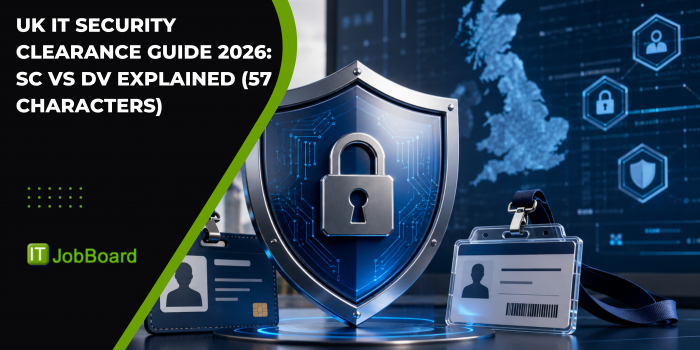
IT Security Clearance in the UK: A Complete SC and DV Guide for 2026
If you've been browsing UK IT job listings, you've probably noticed a recurring phrase: "must hold or be eligible for SC clearance" or, for more sensitive roles, "active DV clearance required." For candidates unfamiliar with the vetting system, this can feel like a locked door. In reality, security clearance is simply a formal background-checking process, and understanding it can open up an entire segment of the UK IT job market — government, defence, policing, and critical national infrastructure — that many candidates overlook.
This guide explains what SC and DV clearance actually involve, how long they take, who needs them, and how to improve your chances of getting cleared.
What Is Security Clearance, and Why Does IT Need It?
Security clearance is a vetting process used by the UK government and its contractors to confirm that someone can be trusted with sensitive information or systems. In IT specifically, clearance is required whenever your role gives you access to government networks, classified data, or infrastructure considered critical to national security — think NHS digital systems, MOD networks, policing databases, or central government IT platforms.
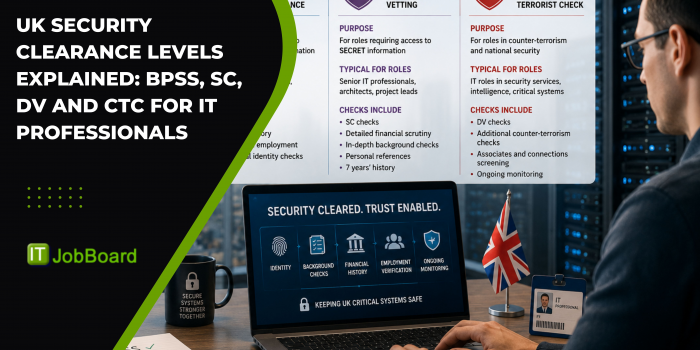
There are several clearance levels in the UK system, but the two you'll encounter most often in IT job adverts are:
- SC (Security Check) — the standard level for most government-adjacent IT roles
- DV (Developed Vetting) — the highest level, reserved for roles with access to top secret material
SC Clearance Explained
SC clearance is the most common level requested in UK IT job listings. It applies to roles involving regular access to SECRET material, or occasional access to TOP SECRET material.
What the SC process checks:
- Identity verification
- UK residency (normally 5 years' continuous UK residency, though shorter periods can sometimes be accepted with additional checks)
- Basic criminal record check
- Credit and financial history check
- Employment history verification (typically 3 years)
- A security questionnaire covering associations, travel, and personal circumstances
Typical timeline: 4 to 8 weeks, though it can extend to 3 months during busy periods or if your background involves time spent abroad.
Roles that typically require SC:
- Software Developer (government contracts)
- Infrastructure Engineer (public sector)
- IT Support Analyst (MOD, Home Office, DWP contracts)
- Cloud Engineer (GovCloud/central government projects)
- Business Analyst (public sector transformation projects)
DV Clearance Explained
DV (Developed Vetting) is the UK's highest level of security clearance and is significantly more thorough. It's required for roles with sustained access to TOP SECRET information, or where the impact of compromise would be extremely serious — for example, roles within intelligence agencies, certain MOD systems, or highly sensitive national infrastructure projects.
What the DV process checks (in addition to everything in SC):
- Full 10-year residency and background check
- In-depth financial audit
- Interviews with the candidate and character referees
- Review of close family and personal relationships
- Lifestyle and character assessment, including any potential vulnerabilities to coercion
Typical timeline: 6 to 12 months. DV clearance is genuinely time-consuming, which is why many employers will sponsor the process for a candidate already in post rather than waiting for someone to arrive pre-cleared.
Roles that typically require DV:
- Senior Security Engineer (intelligence/defence sector)
- Systems Architect (classified MOD programmes)
- Penetration Tester (national security contracts)
- Senior DevOps Engineer (highly sensitive government platforms)
Do You Need to Be Cleared Before Applying?
Not necessarily. Many job adverts say "must be eligible for SC clearance," which means the employer will sponsor the vetting process once you're hired, provided you meet the basic eligibility criteria (usually UK residency and a clean-enough background). Roles requiring active clearance, on the other hand, mean you must already hold a valid clearance — these are less common but appear more often for short-notice or contract positions where there's no time to wait for vetting.
How to Improve Your Clearance Eligibility
- Keep a clean, well-documented address history. Gaps or vague periods (e.g. "travelling," informal arrangements) can slow down vetting.
- Be transparent about financial history. Undisclosed debt is a bigger red flag than debt itself — honesty during the questionnaire matters more than a spotless credit file.
- Minimise unexplained overseas time. Extended periods abroad, particularly in certain countries, can extend processing time or require additional checks.
- Maintain UK residency continuity where possible, especially in the years before applying for SC-required roles.
Does Clearance Expire?
Yes. SC clearance is generally valid for 5 years, and DV clearance for up to 7 years (sometimes reviewed more frequently depending on the sponsoring department), after which re-vetting is required. If you've held clearance before but it lapsed, many employers still view this favourably, as it usually speeds up re-vetting.
Why This Matters for Your Job Search
Public sector and defence-adjacent IT roles often carry strong benefits: stable long-term contracts, competitive day rates for contractors, and less exposure to the volatility seen in some private-sector tech hiring. Candidates who understand the clearance process — and are realistic about timelines — are in a much stronger position to take advantage of this segment of the UK IT job market.
Final Thoughts
Security clearance can look intimidating from the outside, but for most IT professionals, SC clearance is a manageable, well-defined process rather than a barrier. DV clearance is a bigger commitment, but it opens doors to some of the most stable and well-compensated roles in UK tech. If a job listing asks for clearance eligibility rather than active clearance, don't rule yourself out — apply, and let the employer walk you through what's required.
FAQs
Q1: How long does SC clearance take in the UK?
SC clearance typically takes 4 to 8 weeks, though it can take up to 3 months depending on your background, particularly if you've lived or worked abroad recently.
Q2: Can I get security clearance if I'm not a UK citizen?
It depends on your immigration status and residency history. Non-UK nationals can sometimes be eligible for SC clearance, but eligibility becomes more limited, and DV clearance in particular usually requires longer UK residency and additional checks.
Q3: Does having debt stop me from getting cleared?
Not necessarily. Vetting officers are more concerned with undisclosed or poorly managed debt than debt itself. Being upfront about your financial situation during the process is far more important than having a perfect credit history.
Q4: What's the difference between SC and DV clearance?
SC clearance covers regular access to SECRET material and is the most common level for government IT contracts. DV clearance is reserved for roles with sustained access to TOP SECRET material and involves a much deeper, longer background investigation, often taking 6 to 12 months.
Q5: Do I need to pay for my own security clearance?
No. Security clearance is sponsored and paid for by the employer or government department you're working for, not the candidate. You should never need to pay a third party for clearance processing.